

I think one of the easiest mistakes buyers make is treating after-sales support like a bonus feature instead of a core part of the buying decision.
On paper, many beauty machines can look similar. The treatment categories sound familiar. The screens look polished. The handpieces look advanced. But once the machine arrives, daily reality starts to matter more than sales language. A clinic may need help with installation, operatøropplæring, vedlikehold, replacement parts, software issues, or fault diagnosis. That is usually when the real difference between manufacturers becomes obvious.
For clinics, medspas, aesthetic distributors, and startup buyers, a more useful question is not just, “What machine can this company sell me?” It is, “What kind of support will I still have after the machine is installed?”
That question matters because the FDA says proper maintenance, reparere, and servicing are critical to maintaining safe, effektive, and reliable device performance, and WHO guidance treats installation and maintenance as core parts of equipment lifecycle management rather than optional extras.
Why After-Sales Support Matters More Than Many Buyers Expect
A beauty machine does not create value simply because it was delivered successfully. It creates value when it can keep operating consistently inside a real clinic environment.
That means the machine must be installed correctly, understood by staff, maintained on schedule, supported with replacement parts, and backed by a manufacturer that responds clearly when problems appear. WHO materials on health technology management describe planning, selection, procurement, installasjon, and maintenance as connected parts of one system, not separate stages.
When after-sales support is weak, the problems usually show up in familiar ways:
- delayed treatments
- confused operators
- rising maintenance cost
- avoidable downtime
- inconsistent treatment outcomes
- poor client experience
This is why experienced buyers often compare service structure almost as carefully as they compare device features.
What Good After-Sales Support Should Include
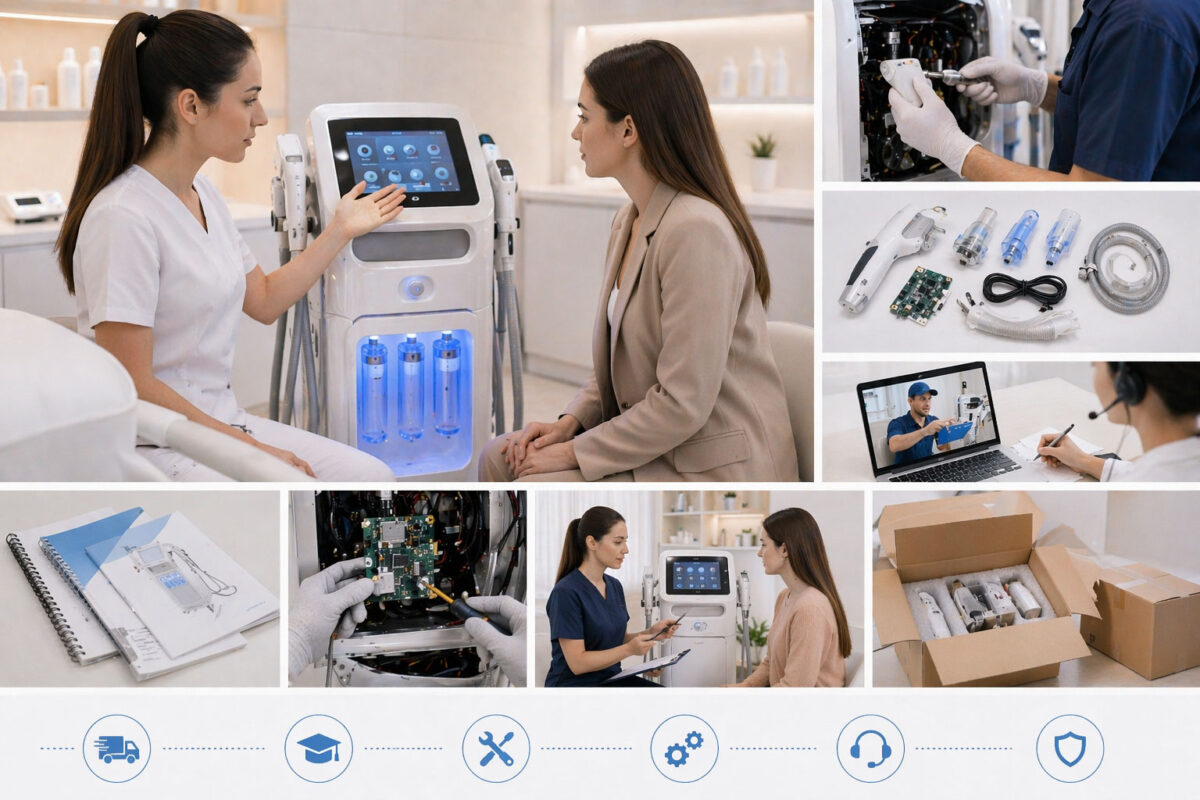
1. Pre-Installation Guidance
Strong support should begin before the machine is ever turned on.
A serious produsent av skjønnhetsmaskiner should be able to tell the buyer what needs to be prepared in advance, including room planning, electrical requirements, ventilation, water access if applicable, forbruksvarer, and unpacking or acceptance steps. WHO’s health technology management framework explicitly includes installation as part of proper equipment management.
A buyer should normally expect:
- site-preparation guidance
- installation checklist
- shipping and unpacking instructions
- setup confirmation
- basic acceptance testing after arrival
If a manufacturer cannot explain setup requirements clearly before delivery, that is usually not a good sign.
2. Operator Training
Training is one of the most important parts of post-sale support, especially when the clinic is adding a new treatment category or onboarding new staff.
WHO policy materials note that user training should be provided for sophisticated devices, that maintenance training should also be provided, and that retraining or refresher courses should be carried out at regular intervals.
That means a buyer should reasonably expect:
- initial operator training
- treatment workflow guidance
- safety and contraindication awareness
- cleaning and daily care instructions
- refresher training
- training support for new staff when needed
For clinics, this matters because staff turnover is common. A machine that depends on informal explanations from one salesperson is not backed by a real support system.
3. Manuals and Documentation
A clinic should not have to keep asking for basic operating documents after payment.
Good after-sales support should include the documents needed to operate and maintain the machine properly. WHO user-guide materials emphasize the role of technical information in helping technicians and health managers use and manage equipment correctly.
Useful documentation may include:
- user manual
- maintenance schedule
- cleaning instructions
- troubleshooting guide
- spare-parts list
- consumables list
- garantivilkår
- relevant conformity or regulatory documents for the target market
This kind of documentation is not just paperwork. It directly affects whether the machine can be run consistently and safely.
4. Preventive Maintenance and Servicing
One of the clearest differences between weak and strong manufacturers is whether they talk about maintenance only after something breaks.
The FDA states that proper maintenance, reparere, and servicing are critical to maintaining safe, effektive, og pålitelig ytelse.
A clinic should expect the manufacturer to provide:
- recommended maintenance intervals
- daily, ukentlig, and monthly care steps
- preventive maintenance guidance
- calibration guidance where relevant
- remote diagnosis support if possible
- clear boundaries between user-serviceable issues and technician-only issues
A machine that only gets attention after a fault occurs is being supported reactively, not professionally.
5. Spare Parts and Consumables Access
A beauty machine is only as useful as the manufacturer’s ability to keep it running.
In real clinic operations, a missing filter, tip, handle, kabel, or internal component can interrupt treatments immediately. That is why buyers should ask about replacement parts before ordering, not after a failure.
What a buyer should want to know:
- which parts wear out first
- which consumables are required regularly
- lead times for replacement parts
- whether regional stock exists
- how reorders are handled
- whether only approved accessories should be used
For overseas buyers, this point becomes even more important because shipping delays can quickly turn a small issue into a larger business problem.
6. Remote Troubleshooting and Technical Response
Most clinics do not expect perfection. They expect clarity and response.
Når en maskin viser en feil, mister stabil utgang, eller oppfører seg uventet, det første behovet er vanligvis fjerndiagnose og et klart neste steg. FDAs klage- og rapporteringsrammeverk viser hvorfor strukturert håndtering av enhetsproblemer er viktig: produsenter forventes å vedlikeholde prosedyrer og filer for enhetsrelaterte klager og hendelser.
En bedre produsent bør kunne tilby:
- ekstern feildiagnose
- video eller veiledet feilsøking
- responsforventninger for tekniske problemer
- eskaleringsvei for uløste feil
- dokumentasjon av tjenestehandlinger
Et tilfeldig løfte som "bare send oss en melding hvis det er et problem" er ikke det samme som en organisert støtteprosess.
7. Klagebehandling
Dette er en av de mest oversett delene av ettersalgsstøtten inntil et alvorlig problem dukker opp.
If a clinic reports abnormal treatment behavior, repeated malfunction, suspected safety issues, or a device-related incident, the manufacturer should have a formal way to receive, evaluate, and document the complaint. FDA materials explain that complaint files and device event reporting are part of the postmarket system used to monitor device performance and safety issues.
I praksis, that means a buyer should expect:
- formal complaint intake
- issue documentation
- investigation process
- feedback when findings are available
- corrective action or replacement path where justified
This protects the clinic, the end user, and the manufacturer itself.
8. Software Updates and Cybersecurity Support
As beauty machines become more software-driven, after-sales support should also include update support.
IMDRF guidance on legacy medical devices explains that cybersecurity is a shared responsibility and that supported devices may require software patches, updates, and related support as part of post-market management.
For machines with digital interfaces or connected functions, buyers should ask about:
- software update notices
- patch support
- version tracking
- update timing guidance
- support for software-related faults
This is especially relevant for newer-generation devices that rely more heavily on software-controlled treatment interfaces.
9. Clear Warranty Terms
Warranty should be specific, not vague.
A good warranty structure should explain:
- warranty period
- covered parts
- whether labor is included
- what counts as misuse
- who pays shipping for replacements
- what voids coverage
- how claims are handled
The practical point is simple: kjøperen bør vite hva som skjer hvis maskinen utvikler et problem måneder etter installasjonen.
10. Løpende kommersiell støtte
Ikke alle kjøpere trenger dette, men det kan fortsatt ha betydning.
Noen produsenter støtter ikke bare den tekniske siden, men også klinikkens evne til å bruke maskinen kommersielt. Avhengig av selskapet, som kan inkludere:
- veiledning av behandlingsprotokoll
- råd om forbruksvarer
- markedsføringsbilder
- distributøropplæringsmateriell
- støtte for fremtidig utstyrsutvidelse
Dette er ikke viktigere enn sikkerhet, opplæring, eller servicerespons, men det kan fortsatt forbedre kjøperopplevelsen, spesielt for nyere klinikker.
Hvorfor dette betyr enda mer for avanserte estetiske enheter
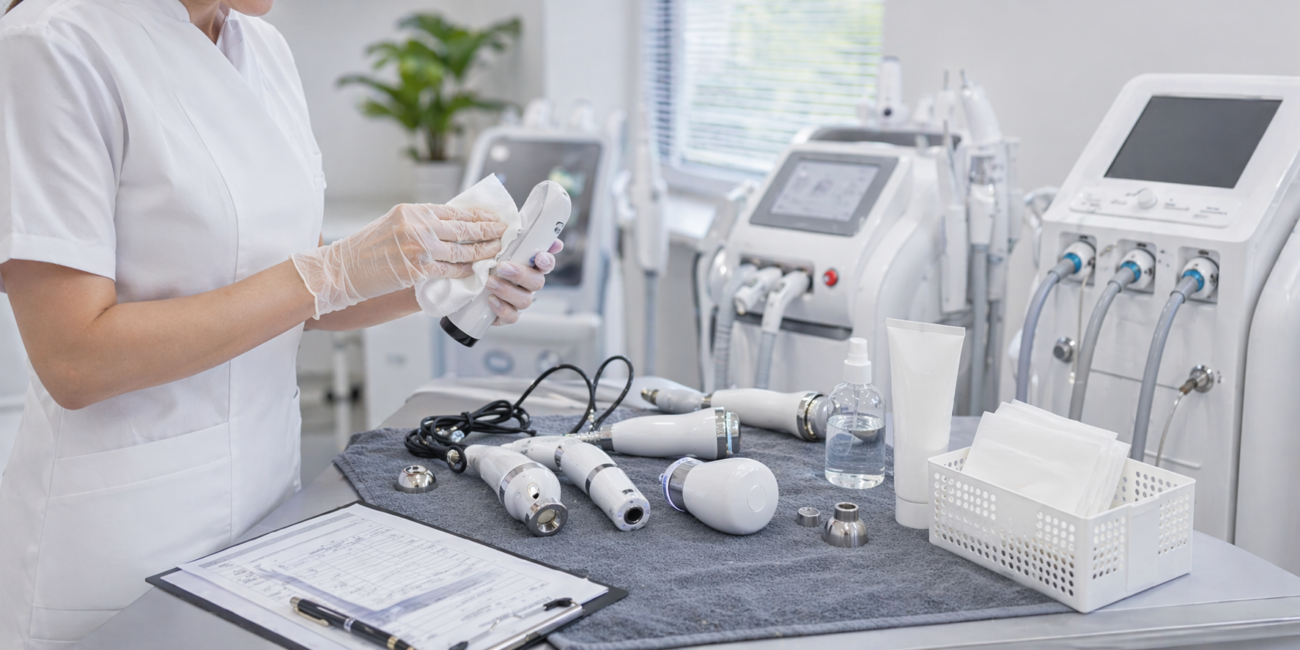
Behovet for sterk ettersalgsstøtte blir enda viktigere når enhetskategorien er mer kompleks.
Det inkluderer kategorier som RF microneedling, lasersystemer, og andre estetiske plattformer med høyere risiko. For eksempel, FDA utstedte en sikkerhetsmelding sent 2025 advarsel om alvorlige komplikasjoner rapportert ved visse bruk av RF-mikronålingsenheter, inkludert brannskader, arrdannelse, fett tap, vansiring, og nerveskader. Når slike risikoer dukker opp, støtte etter salg er ikke bare en bekvemmelighet. Det blir en del av ansvarlig enhetslivssyklusadministrasjon.
Det er derfor klinikker bør bruke en høyere standard når de evaluerer støtte etter salg for avansert utstyr.
En skjønnhetsmaskinprodusent verdt å vurdere
Hvis du fortsatt sammenligner produsenter av skjønnhetsmaskiner, det kan være nyttig å se utover selve maskinlisten og være oppmerksom på om bedriften ser ut til å være klar for langsiktig utstyrsstøtte.
Det er en del av hvorfor en produsent liker Uangelcare kan være verdt å holde seg på shortlisten. Selskapet presenterer seg rundt en bredere one-stop medisinsk estetisk enhetsmodell, dekkende design, R&D, produksjon, og salg i stedet for bare å skyve en enkelt enhetskategori.
Fra en kjøpers perspektiv, denne typen posisjonering kan være nyttig fordi klinikker ofte trenger mer enn én maskin over tid, og ettersalgskoordinering er vanligvis enklere når produsenten allerede er strukturert rundt bredere utstyrsstøtte.
For kjøpere som planlegger et trinnvis klinikkoppsett i stedet for et engangskjøp av utstyr, den typen produksjon og støtteomfang kan være verdt å være mer oppmerksom på.
Siste tanker
En skjønnhetsmaskin er ikke bare et kjøp. Det er et langsiktig driftsverktøy.
Derfor bør ettersalgsstøtte behandles som en del av selve produktet. The strongest beauty machine manufacturers are usually not just the ones with attractive brochures or competitive launch pricing. They are the ones that can support the full post-sale lifecycle: installasjon, opplæring, documentation, vedlikehold, reservedeler, feilsøking, klagebehandling, updates, and warranty clarity.
That is what clinics should expect. And that is what buyers should push for before they place the order.
FAQ
Good after-sales support should include installation guidance, operatøropplæring, manualer, maintenance planning, spare parts access, troubleshooting help, klare garantivilkår, and complaint-handling procedures. FDA and WHO materials both support the idea that maintenance, installasjon, and lifecycle management are core parts of device reliability and safe use.
Because staff need to understand operation, rengjøring, safety steps, and routine care. WHO policy materials also note that user training, maintenance training, and refresher training should be provided, especially for more complex devices.
Ja. Spare-parts availability affects downtime, treatment continuity, and long-term operating cost. A machine with poor parts access can create much bigger problems later even if the purchase price looked attractive at the start.
Because device problems and repeated malfunctions need to be documented and evaluated properly. FDA materials show that complaint files and postmarket reporting are part of how device performance and potential safety issues are monitored.
Some do. For devices with software-controlled interfaces or connected functions, update and patch support can matter. IMDRF guidance treats cybersecurity and post-market update support as part of responsible device lifecycle management.