

Ich denke, einer der einfachsten Fehler, den Käufer machen, besteht darin, den After-Sales-Support wie eine Bonusfunktion zu behandeln und nicht als zentralen Teil der Kaufentscheidung.
Auf Papier, Viele Schönheitsmaschinen können ähnlich aussehen. Die Behandlungskategorien kommen mir bekannt vor. Die Bildschirme sehen poliert aus. Die Handstücke sehen fortschrittlich aus. Aber sobald die Maschine ankommt, Die tägliche Realität beginnt wichtiger zu sein als die Verkaufssprache. Eine Klinik benötigt möglicherweise Hilfe bei der Installation, Bedienerschulung, Wartung, Ersatzteile, Softwareprobleme, oder Fehlerdiagnose. Dann wird meist der wahre Unterschied zwischen den Herstellern deutlich.
Für Kliniken, Medspas, ästhetische Händler, und Startup-Käufer, Eine nützlichere Frage ist nicht nur, „Welche Maschine kann mir diese Firma verkaufen??" Es ist, „Welchen Support habe ich nach der Installation der Maschine noch??”
Diese Frage ist wichtig, weil die Die FDA sagt ordnungsgemäße Wartung, reparieren, und Wartung sind für die Aufrechterhaltung der Sicherheit von entscheidender Bedeutung, wirksam, und zuverlässige Geräteleistung, und die WHO-Leitlinien behandeln Installation und Wartung als Kernbestandteile des Gerätelebenszyklusmanagements und nicht als optionale Extras.
Warum After-Sales-Support wichtiger ist, als viele Käufer erwarten
Eine Schönheitsmaschine schafft keinen Wert, nur weil sie erfolgreich geliefert wurde. Es schafft einen Mehrwert, wenn es in einer echten Klinikumgebung konsistent weiterarbeiten kann.
Das heißt, die Maschine muss korrekt installiert sein, vom Personal verstanden, termingerecht gehalten, mit Ersatzteilen unterstützt, und unterstützt von einem Hersteller, der klar reagiert, wenn Probleme auftreten. WHO-Materialien zum Gesundheitstechnologiemanagement beschreiben die Planung, Auswahl, Beschaffung, Installation, und Wartung als verbundene Teile eines Systems, keine getrennten Stufen.
Wenn der After-Sales-Support schwach ist, Die Probleme treten normalerweise auf bekannte Weise auf:
- verzögerte Behandlungen
- verwirrte Betreiber
- steigende Wartungskosten
- vermeidbare Ausfallzeiten
- inkonsistente Behandlungsergebnisse
- schlechte Kundenerfahrung
Aus diesem Grund vergleichen erfahrene Käufer die Servicestruktur oft fast genauso sorgfältig wie die Gerätefunktionen.
Was ein guter After-Sales-Support beinhalten sollte
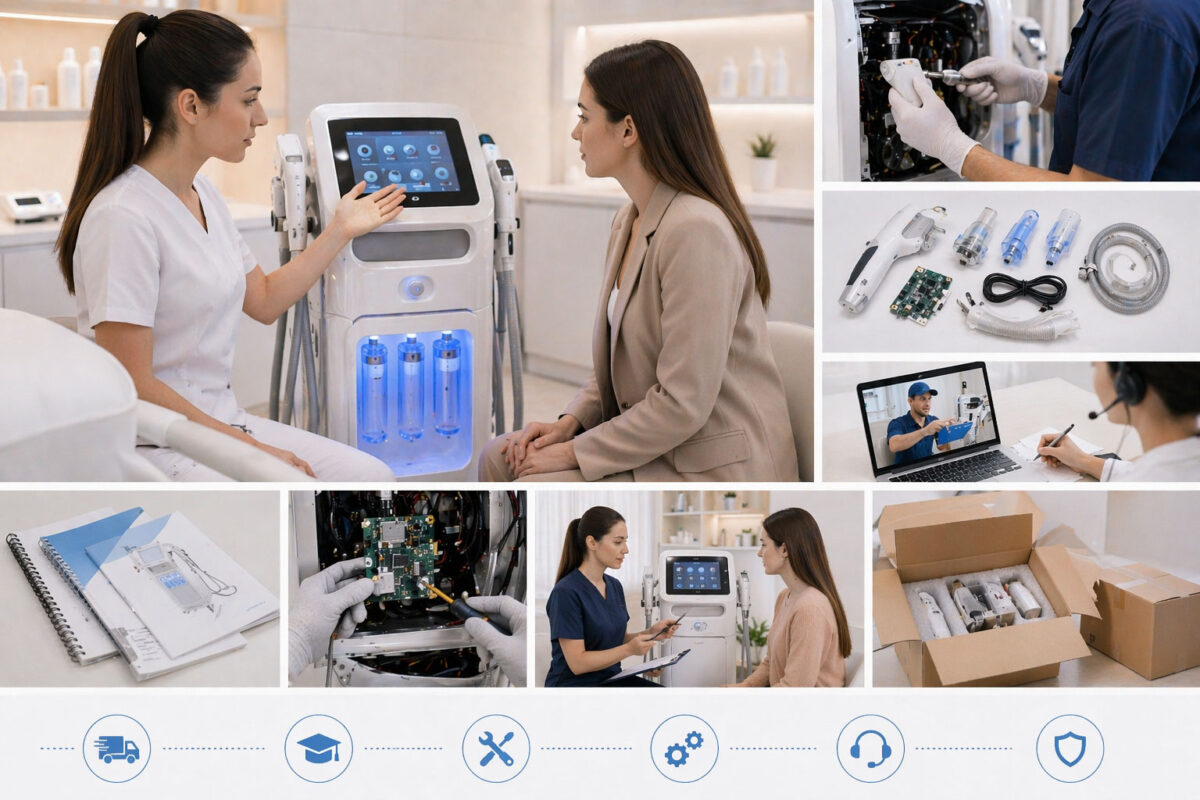
1. Anleitung vor der Installation
Eine starke Unterstützung sollte bereits vor dem Einschalten der Maschine beginnen.
Ein Ernst Hersteller von Schönheitsmaschinen sollte dem Käufer im Voraus sagen können, was vorbereitet werden muss, inklusive Raumplanung, elektrische Anforderungen, Belüftung, ggf. Wasserzugang, Verbrauchsmaterial, und Auspack- oder Abnahmeschritte. Das Gesundheitstechnologie-Management-Rahmenwerk der WHO sieht die Installation ausdrücklich als Teil eines ordnungsgemäßen Gerätemanagements vor.
Ein Käufer sollte normalerweise damit rechnen:
- Anleitung zur Standortvorbereitung
- Checkliste für die Installation
- Anweisungen zum Versand und Auspacken
- Setup-Bestätigung
- Grundlegende Abnahmeprüfung nach der Ankunft
Wenn ein Hersteller die Einrichtungsanforderungen vor der Lieferung nicht klar erklären kann, Das ist normalerweise kein gutes Zeichen.
2. Bedienerschulung
Schulungen sind einer der wichtigsten Bestandteile des Post-Sale-Supports, insbesondere, wenn die Klinik eine neue Behandlungskategorie hinzufügt oder neues Personal einstellt.
In den Richtlinienmaterialien der WHO wird darauf hingewiesen, dass für hochentwickelte Geräte Benutzerschulungen angeboten werden sollten, dass auch Wartungsschulungen angeboten werden sollten, und dass in regelmäßigen Abständen Umschulungs- oder Auffrischungskurse durchgeführt werden sollten.
Das bedeutet, dass ein Käufer vernünftigerweise damit rechnen sollte:
- Erstschulung des Bedieners
- Anleitung zum Behandlungsablauf
- Bewusstsein für Sicherheit und Kontraindikationen
- Reinigungs- und tägliche Pflegehinweise
- Auffrischungsschulung
- Schulungsunterstützung für neue Mitarbeiter bei Bedarf
Für Kliniken, Dies ist wichtig, da es häufig zu Personalfluktuationen kommt. Eine Maschine, die auf informelle Erklärungen eines Verkäufers angewiesen ist, verfügt nicht über ein echtes Supportsystem.
3. Handbücher und Dokumentation
Eine Klinik sollte nach der Bezahlung nicht ständig nach grundlegenden Betriebsunterlagen fragen müssen.
Ein guter After-Sales-Support sollte die Dokumente umfassen, die für den ordnungsgemäßen Betrieb und die Wartung der Maschine erforderlich sind. Die Benutzerhandbücher der WHO betonen die Rolle technischer Informationen bei der Unterstützung von Technikern und Gesundheitsmanagern bei der korrekten Verwendung und Verwaltung von Geräten.
Nützliche Dokumentation kann sein::
- Bedienungsanleitung
- Wartungsplan
- Reinigungshinweise
- Anleitung zur Fehlerbehebung
- Ersatzteilliste
- Liste der Verbrauchsmaterialien
- Garantiebedingungen
- relevante Konformitäts- oder Regulierungsdokumente für den Zielmarkt
Bei dieser Art der Dokumentation handelt es sich nicht nur um Papierkram. Es wirkt sich direkt darauf aus, ob die Maschine gleichmäßig und sicher betrieben werden kann.
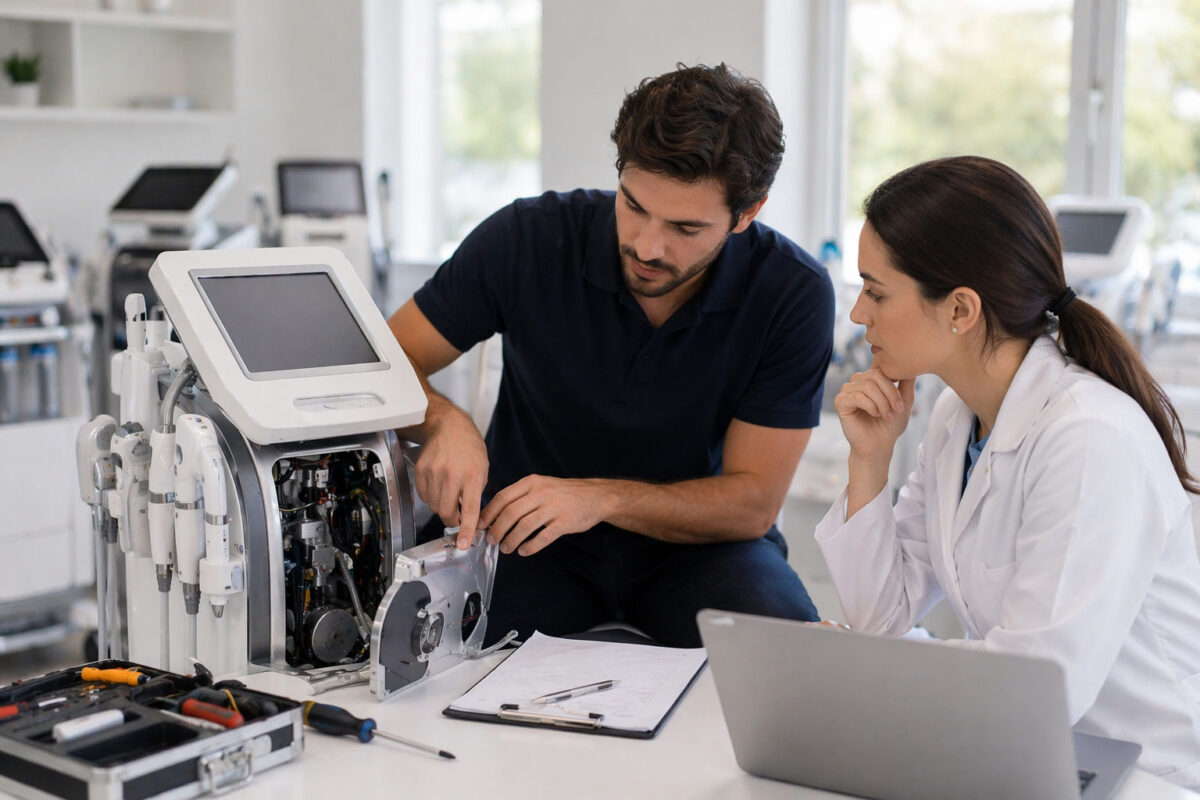
4. Vorbeugende Wartung und Instandhaltung
Einer der deutlichsten Unterschiede zwischen schwachen und starken Herstellern besteht darin, ob sie erst dann von der Wartung sprechen, wenn etwas kaputt ist.
Die FDA gibt an, dass eine ordnungsgemäße Wartung erforderlich ist, reparieren, und Wartung sind für die Aufrechterhaltung der Sicherheit von entscheidender Bedeutung, wirksam, und zuverlässige Leistung.
Eine Klinik sollte vom Hersteller erwarten, dass er diese bereitstellt:
- empfohlene Wartungsintervalle
- täglich, wöchentlich, und monatliche Pflegeschritte
- Anleitung zur vorbeugenden Wartung
- Kalibrierungsanleitung, sofern relevant
- Unterstützung bei der Ferndiagnose wenn möglich
- klare Grenzen zwischen vom Benutzer zu wartenden Problemen und Problemen, die nur von Technikern durchgeführt werden können
Eine Maschine, die erst nach Auftreten eines Fehlers Aufmerksamkeit erregt, wird reaktiv unterstützt, nicht beruflich.
5. Zugang zu Ersatzteilen und Verbrauchsmaterialien
Eine Schönheitsmaschine ist nur so nützlich wie die Fähigkeit des Herstellers, sie am Laufen zu halten.
Im echten Klinikbetrieb, ein fehlender Filter, Tipp, handhaben, Kabel, oder eine interne Komponente kann die Behandlung sofort unterbrechen. Deshalb sollten Käufer vor der Bestellung nach Ersatzteilen fragen, nicht nach einem Misserfolg.
Was ein Käufer wissen sollte:
- Welche Teile verschleißen zuerst?
- welche Verbrauchsmaterialien regelmäßig benötigt werden
- Lieferzeiten für Ersatzteile
- ob regionaler Bestand vorhanden ist
- wie mit Nachbestellungen umgegangen wird
- ob nur zugelassenes Zubehör verwendet werden soll
Für ausländische Käufer, Dieser Punkt wird umso wichtiger, da Lieferverzögerungen aus einem kleinen Problem schnell ein größeres Geschäftsproblem machen können.
6. Remote-Fehlerbehebung und technische Reaktion
Die meisten Kliniken erwarten keine Perfektion. Sie erwarten Klarheit und Reaktion.
Wenn eine Maschine einen Fehler anzeigt, verliert stabile Ausgabe, oder verhält sich unerwartet, Der erste Bedarf besteht in der Regel in einer Ferndiagnose und einem klaren nächsten Schritt. Das Beschwerde- und Meldesystem der FDA zeigt, warum eine strukturierte Behandlung von Geräteproblemen wichtig ist: Von den Herstellern wird erwartet, dass sie Verfahren und Dateien für gerätebezogene Beschwerden und Ereignisse führen.
Ein besserer Hersteller sollte das anbieten können:
- Fehlerferndiagnose
- Video oder geführte Fehlerbehebung
- Reaktionserwartungen für technische Probleme
- Eskalationspfad für ungelöste Fehler
- Dokumentation von Serviceaktionen
Ein beiläufiges Versprechen wie „Schreiben Sie uns einfach, wenn es ein Problem gibt“ ist nicht dasselbe wie ein organisierter Supportprozess.
7. Beschwerdebearbeitung
Dies ist einer der am häufigsten übersehenen Teile des Kundendienstes, bis ein ernstes Problem auftritt.
Wenn eine Klinik ein abnormales Behandlungsverhalten meldet, wiederholte Fehlfunktion, vermutete Sicherheitsprobleme, oder ein gerätebezogener Vorfall, Der Hersteller sollte eine formelle Empfangsmöglichkeit haben, auswerten, und dokumentieren Sie die Beschwerde. In Materialien der FDA wird erläutert, dass Beschwerdedateien und Geräteereignisberichte Teil des Postmarket-Systems sind, das zur Überwachung der Geräteleistung und Sicherheitsprobleme verwendet wird.
In der Praxis, Das bedeutet, dass ein Käufer damit rechnen sollte:
- formelle Beschwerdeaufnahme
- Ausgabedokumentation
- Untersuchungsprozess
- Rückmeldung, wenn Erkenntnisse vorliegen
- Korrekturmaßnahmen oder Ersatzwege, sofern gerechtfertigt
Das schützt die Klinik, der Endbenutzer, und der Hersteller selbst.
8. Software-Updates und Cybersicherheitsunterstützung
Da Schönheitsmaschinen immer softwaregesteuerter werden, Der After-Sales-Support sollte auch den Update-Support umfassen.
In den IMDRF-Leitlinien zu älteren medizinischen Geräten wird erklärt, dass Cybersicherheit eine gemeinsame Verantwortung ist und dass für unterstützte Geräte möglicherweise Software-Patches erforderlich sind, Aktualisierungen, und damit verbundene Unterstützung im Rahmen des Post-Market-Managements.
Für Maschinen mit digitalen Schnittstellen oder vernetzten Funktionen, Käufer sollten nachfragen:
- Hinweise zu Software-Updates
- Patch-Unterstützung
- Versionsverfolgung
- Aktualisieren Sie die Timing-Anleitung
- Unterstützung bei softwarebedingten Fehlern
Dies gilt insbesondere für Geräte der neueren Generation, die stärker auf softwaregesteuerte Behandlungsschnittstellen angewiesen sind.
9. Klare Garantiebedingungen
Die Garantie sollte spezifisch sein, nicht vage.
Eine gute Garantiestruktur sollte erklären:
- Garantiezeit
- abgedeckte Teile
- ob Arbeitskräfte enthalten sind
- was als Missbrauch gilt
- Wer übernimmt die Versandkosten für Ersatzlieferungen?
- wodurch der Versicherungsschutz erlischt
- wie mit Ansprüchen umgegangen wird
Der praktische Punkt ist einfach: Der Käufer sollte wissen, was passiert, wenn Monate nach der Installation an der Maschine ein Problem auftritt.
10. Laufende kommerzielle Unterstützung
Das braucht nicht jeder Käufer, aber es kann trotzdem wichtig sein.
Einige Hersteller unterstützen nicht nur die technische Seite, sondern auch die Möglichkeit der Klinik, die Maschine kommerziell zu nutzen. Je nach Unternehmen, das kann beinhalten:
- Anleitung zum Behandlungsprotokoll
- Beratung zu Verbrauchsmaterialien
- Marketingvisualisierungen
- Schulungsmaterialien für Vertriebshändler
- Unterstützung für zukünftige Geräteerweiterungen
Das ist nicht wichtiger als die Sicherheit, Ausbildung, oder Service-Antwort, aber es kann das Käufererlebnis dennoch verbessern, insbesondere für neuere Kliniken.
Warum dies für fortschrittliche ästhetische Geräte noch wichtiger ist
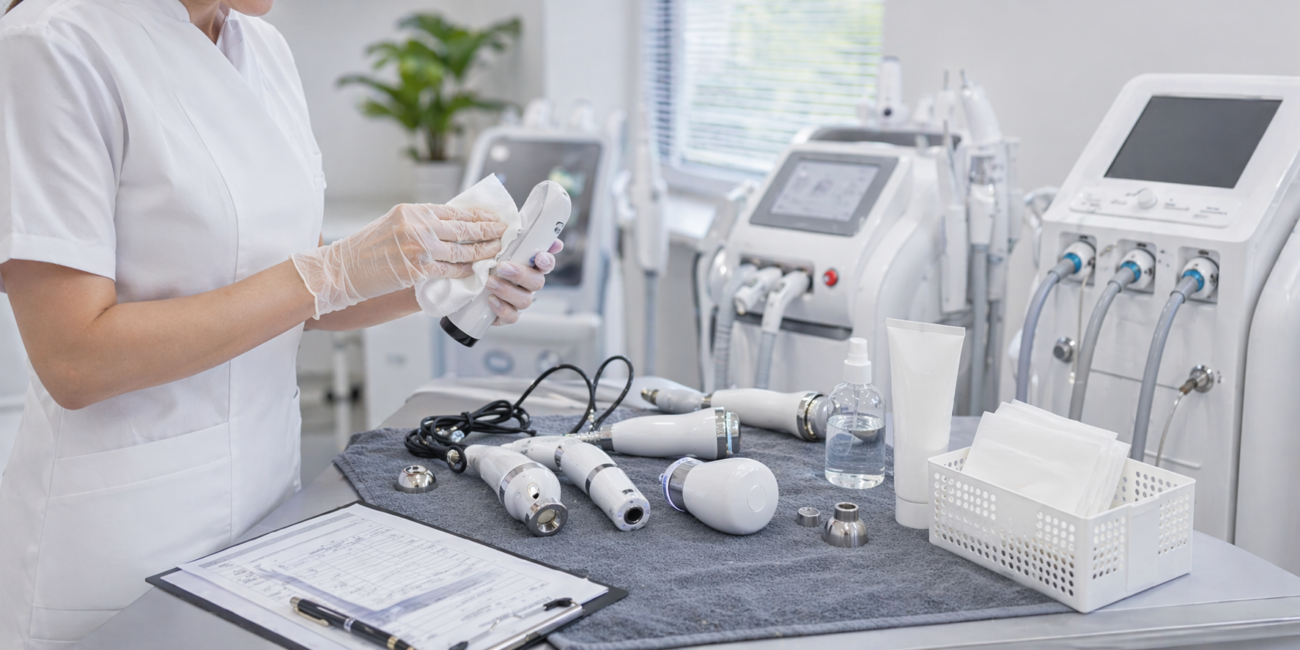
Der Bedarf an einem starken After-Sales-Support wird umso wichtiger, je komplexer die Gerätekategorie ist.
Dazu gehören Kategorien wie RF-Microneedling, Lasersysteme, und andere risikoreichere ästhetische Plattformen. Zum Beispiel, Die FDA hat kürzlich eine Sicherheitsmitteilung herausgegeben 2025 Warnung vor schwerwiegenden Komplikationen, die bei bestimmten Anwendungen von HF-Mikronadelgeräten gemeldet wurden, einschließlich Verbrennungen, Narbenbildung, Fettabbau, Entstellung, und Nervenschäden. Wenn solche Risiken auftauchen, Support nach dem Verkauf ist nicht nur eine Annehmlichkeit. Es wird Teil eines verantwortungsvollen Gerätelebenszyklusmanagements.
Aus diesem Grund sollten Kliniken bei der Bewertung des Post-Sale-Supports für moderne Geräte höhere Maßstäbe anlegen.
Ein Hersteller von Schönheitsmaschinen, der eine Überlegung wert ist
Wenn Sie immer noch Hersteller von Schönheitsmaschinen vergleichen, Es kann sinnvoll sein, über die Maschinenliste hinauszuschauen und darauf zu achten, ob das Unternehmen für eine längerfristige Geräteunterstützung gerüstet zu sein scheint.
Das ist einer der Gründe, warum ein Hersteller so beliebt ist Uangelcare Es könnte sich lohnen, auf der engeren Auswahlliste zu bleiben. Das Unternehmen präsentiert sich mit einem umfassenderen One-Stop-Modell für medizinisch-ästhetische Geräte, Abdeckdesign, R&D, Produktion, und Verkäufe, anstatt nur eine einzelne Gerätekategorie voranzutreiben.
Aus Käufersicht, Diese Art der Positionierung kann hilfreich sein, da Kliniken im Laufe der Zeit oft mehr als ein Gerät benötigen, und die After-Sales-Koordination ist in der Regel einfacher, wenn der Hersteller bereits auf eine umfassendere Geräteunterstützung ausgerichtet ist.
Für Käufer, die eine schrittweise Einrichtung der Klinik statt eines einmaligen Gerätekaufs planen, Diese Art von Fertigungs- und Supportumfang kann es wert sein, genauer beachtet zu werden.
Letzte Gedanken
Eine Schönheitsmaschine ist nicht nur ein Kauf. Es handelt sich um ein langfristiges Betriebsmittel.
Deshalb sollte der After-Sales-Support als Teil des Produkts selbst betrachtet werden. Die stärksten Hersteller von Schönheitsgeräten sind in der Regel nicht nur diejenigen mit attraktiven Broschüren oder wettbewerbsfähigen Einführungspreisen. Sie sind diejenigen, die den gesamten Lebenszyklus nach dem Verkauf unterstützen können: Installation, Ausbildung, Dokumentation, Wartung, Ersatzteile, Fehlerbehebung, Beschwerdebearbeitung, Aktualisierungen, und Garantieklarheit.
Damit sollten Kliniken rechnen. Und genau darauf sollten Käufer drängen, bevor sie die Bestellung aufgeben.
FAQ
Zu einem guten After-Sales-Support gehört auch eine Installationsanleitung, Bedienerschulung, Handbücher, Wartungsplanung, Zugang zu Ersatzteilen, Hilfe bei der Fehlerbehebung, klare Garantiebedingungen, und Beschwerdebearbeitungsverfahren. Sowohl FDA- als auch WHO-Materialien unterstützen die Idee dieser Wartung, Installation, und Lebenszyklusmanagement sind zentrale Bestandteile der Gerätezuverlässigkeit und der sicheren Nutzung.
Denn die Mitarbeiter müssen die Bedienung verstehen, Reinigung, Sicherheitsschritte, und Routinepflege. In den Richtlinienmaterialien der WHO wird auch darauf hingewiesen, dass Benutzerschulungen durchgeführt werden, Wartungsschulung, und Auffrischungsschulungen sollten angeboten werden, insbesondere für komplexere Geräte.
Ja. Die Ersatzteilverfügbarkeit wirkt sich auf die Ausfallzeit aus, Behandlungskontinuität, und langfristige Betriebskosten. Eine Maschine mit schlechtem Teilezugang kann später viel größere Probleme bereiten, selbst wenn der Kaufpreis zu Beginn attraktiv schien.
Denn Geräteprobleme und wiederholte Störungen müssen ordnungsgemäß dokumentiert und ausgewertet werden. FDA-Materialien zeigen, dass Beschwerdeakten und Berichte nach dem Inverkehrbringen Teil der Überwachung der Geräteleistung und potenzieller Sicherheitsprobleme sind.
Manche tun es. Für Geräte mit softwaregesteuerten Schnittstellen oder angeschlossenen Funktionen, Update- und Patch-Unterstützung können von Bedeutung sein. Die IMDRF-Leitlinien behandeln Cybersicherheit und Post-Market-Update-Support als Teil eines verantwortungsvollen Gerätelebenszyklusmanagements.