

Ultralydskavitationsadvarsler, Risici & Bivirkninger: What Clinics Don’t Tell You
Nøgle takeaways
- Ultrasonic cavitation is FDA-cleared as a cosmetic device, not a weight-loss device — that distinction matters enormously, especially when considering ultrasonic cavitation risks.
- Most side effects are mild and temporary, but serious risks exist, especially with unqualified operators or improper contraindications screening
- The single biggest risk isn’t physical — it’s marketing hype setting unrealistic expectations
- Absolute contraindications include pregnancy, liver/kidney disease, pacemaker, metal implants, and active infections
- Clinical evidence is mixed: studies show an average fat reduction of 1–3 cm per treatment area, not the “melts away fat” messaging suggests
What Is Ultrasonic Cavitation?
Let’s be clear about what this technology actually does — and what it doesn’t.
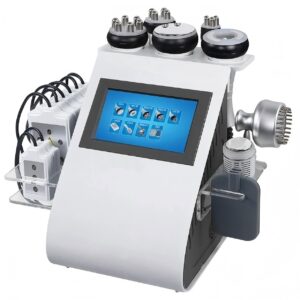
Ultrasonic cavitation uses low-frequency ultrasound waves (typisk 40 kHz) to create microscopic bubbles within fat cells. These bubbles expand and collapse, disrupting the cell membrane and releasing stored triglycerides into the interstitial space, where the lymphatic system processes them for elimination.
That sounds impressive. And for some people, it genuinely works. But here’s the reality:
- It’s a circumference reduction behandling, not a weight-loss treatment
- You will not see dramatic changes on the scale
- Results are subtle, gradual, and highly dependent on the operator’s skill, your lymphatic health, and whether you’re maintaining the surrounding lifestyle habits
- Most studies report 1–3 cm reduction per treatment area after 6–12 sessions
The fat cell isn’t destroyed — it’s emptied. Those cells can refill if caloric intake increases. This is a maintenance reality, not a scare tactic.
Common Side Effects (What Most People Experience)
After a typical cavitation session, you may notice:
- Redness and warmth in the treated area — normal, usually resolves within 30–60 minutes
- Mild bruising — particularly in areas with less subcutaneous fat or where transducer pressure was excessive
- Temporary numbness or tingling — caused by mild nerve stimulation; typically resolves within hours
- Increased urination — this is actually a good sign; it means your lymphatic system is actively processing released fat
- Thirst — the metabolic process of clearing released triglycerides requires water
These effects are not warnings. They’re expected physiological responses. If your provider tells you none of this will happen, that’s a red flag.
Less Common but Notable Side Effects
Not everyone sails through treatment. Some clients experience:
Skin Irregularities
Uneven pressure distribution during treatment can cause temporary lumpy or wavy skin texture. This usually resolves within days to weeks, but in rare cases of improper technique or excessive energy settings, it can persist.
First-Degree Burns
Ja, this happens. When the ultrasound probe is held in one position for too long, or when the operator uses settings inappropriate for the client’s skin/fat thickness, thermal buildup can cause superficial burns. First-degree burns heal without scarring but are painful and avoidable with proper training.
Nerve Sensitivity
Some clients report temporary hypersensitivity or, conversely, temporary numbness in the treated area lasting up to 2–4 weeks. This is usually nerve edema from the acoustic energy — not permanent, but uncomfortable.
Post-inflammatorisk hyperpigmentering (PIH)
Clients with darker skin tones (Fitzpatrick IV-VI) are at higher risk for PIH, particularly if the skin was recently tanned or if inflammation was excessive. Proper skin typing and sun protection before/after treatment reduces this risk.
Serious Risks: When Things Go Wrong
These are not common, but they are real. The risk increases dramatically with unqualified operators, unapproved devices, or inadequate contraindications screening.
Liver Stress
Fat mobilized from adipose tissue travels through the portal circulation to the liver. For clients with fatty liver disease (NAFLD — extremely common in overweight populations), adding significant fat load through repeated cavitation treatments may worsen liver function. This is rarely discussed in marketing materials.
Kidney Overload
The lymphatic system and kidneys process released triglycerides and cellular debris. Clients with pre-existing kidney impairment cannot safely clear this additional metabolic load.
Deep Vein Thrombosis (DVT)
There are documented cases (primarily in European medical literature) of DVT following aggressive cavitation treatments, particularly in the lower extremities. The proposed mechanism: rapid mobilization of fat and fluid shifts may alter blood viscosity and venous return dynamics.
Organ Damage
This is rare but documented. If ultrasound energy penetrates beyond the subcutaneous fat layer — through operator error, broken equipment, or treatment over bony areas — internal organs can sustain thermal injury. This is why proper training and anatomical knowledge are non-negotiable.
The Full Contraindication List
Absolutte kontraindikationer (Treatment MUST NOT Proceed)
- Pregnancy or breastfeeding
- Active implanted devices: pacemaker, cochlear implant, insulin pump
- Metallic implants in the treatment area (IUDs are generally okay — confirm with manufacturer)
- Liver failure, kidney disease, or active hepatitis
- Active cancer or cancer within 5 år (remission cases require physician approval)
- Autoimmune conditions affecting connective tissue (lupus, sklerodermi)
- HIV or AIDS
- Blood disorders (hemophilia, deep vein thrombosis history)
- Epilepsy
- Severe hypertension or cardiovascular disease
- Aktive hudinfektioner, eksem, or open wounds in the treatment area
Relative kontraindikationer (Proceed with Caution, Physician Consultation Recommended)
- Menstruation (abdominal treatment should be avoided)
- Recent surgical scars (wait 6–12 months)
- Fibrocystic breast tissue
- Thyroid disorders
- Metal orthodontic braces (dental concern)
- Very thin clients (less subcutaneous fat = higher risk of energy reaching deeper structures)
This list is not drama. It’s copied from legitimate device manuals and peer-reviewed safety guidelines. If a clinic hands you a waiver with three bullet points, that’s not streamlining — that’s negligence.
Enheder i hjemmet: A Different Risk Profile
Consumer-grade cavitation devices are flooding the market — Amazon, AliExpress, direct-to-consumer brands. Here’s what the marketing doesn’t say:
- Power output is unregulated. Many consumer devices operate at frequencies and intensities that bear no meaningful relationship to clinical studies
- No contraindications screening. The person buying it online doesn’t know they have a hidden pacemaker lead or early-stage fatty liver
- Burn and nerve damage cases are rising in proportion to consumer device sales. Emergency room visits for home lipolysis device injuries increased significantly in 2022–2024 data from poison control centers and burn units
- You cannot see results the same way clinics measure them — without calipers or imaging, any “improvement” is psychological
If you’re a clinic owner sourcing devices, offering home devices as an add-on is a liability minefield. Make sure your consent forms cover home device guidance explicitly.
How to Minimize Risks: A Practitioner’s Checklist
Based on FDA adverse event reports, clinical literature, and manufacturer safety guidelines:
- Contraindications screening — Written intake form, verbal confirmation, never skip it
- Skin-fold measurement — Calipers before and after. This is how you set treatment parameters and detect clients with too little subcutaneous fat
- Proper training — Minimum 8-hour manufacturer certification with anatomical competency assessment
- Device calibration — Check output weekly with a hydrophone or manufacturer-provided test tool
- Treatment timing — Minimum 72 hours between sessions per treatment area; never treat the same spot twice in one session
- Hydration protocol — Client should drink 1.5–2L of water in the 24 hours before and after treatment
- Lymphatic support — Recommend dry brushing, light exercise, or professional lymphatic drainage massage post-treatment
- Document everything — Photos, measurements, settings used, client feedback
The Honesty Gap: What Marketing Claims vs. What Science Says
| Marketing Claim | Reality |
|---|---|
| “Non-invasive fat removal” | It’s fat mobilization, not removal. The fat still needs to be metabolized. |
| “Results after just 1 session” | Visible changes typically require 6–12 sessions. Most studies measured at week 8–12. |
| “Permanent fat reduction” | The fat cells are emptied, not eliminated. They can refill. |
| “Suitable for everyone” | Only clients within 10–20 lbs of ideal weight with good skin elasticity see optimal results. |
| “FDA godkendt” | FDA-cleared as a cosmetic device. There is no FDA-approved cavitation device for fat reduction. |
Let’s be clear: cavitation works. But it works within a narrow band of realistic expectations. The clinics that oversell it don’t just harm clients — they harm the industry’s credibility.
What the Clinical Evidence Actually Says
Peer-reviewed research on ultrasonic cavitation is growing, though quality varies significantly:
- Fat reduction: EN 2019 study in the Journal of Cosmetic Dermatology found an average circumference reduction of 2.5 cm in the waist after 8 sessioner, compared to 0.4 cm in the control group. That’s meaningful, but not transformative.
- Hudopstramning: Evidence is weaker. Most improvements in skin appearance are attributed to the lymphatic drainage effect, not actual collagen remodeling.
- Sikkerhed: The same study reported only mild, transient side effects. No serious adverse events were recorded — but this was in a controlled clinical setting with trained operators.
- Long-term data: Virtually absent. We don’t know what happens to emptied fat cells over 3–5 years.
The honest summary: cavitation is a reasonable complement to diet and exercise for clients who are already healthy but have localized fat deposits that resist change. It is not a standalone weight-loss solution, and any provider who positions it that way should be questioned.
Ofte stillede spørgsmål
How many sessions do I need to see results?
Most clients need 6–12 sessions, spaced 3–7 days apart. You should see measurable changes by session 4–6 if you’re responding to treatment.
Does ultrasonic cavitation hurt?
Most clients describe it as warm, prikkende, or mildly uncomfortable — similar to a deep tissue massage. Treatment over bony areas (ribs, hofter) can be sharper. If it hurts, tell your operator immediately.
Can I do cavitation while pregnant?
Ingen. Absolutely not. This is an absolute contraindication.
What should I do before treatment?
Stay well-hydrated (vand, not caffeine or alcohol), avoid eating 2 hours before, wear loose clothing, and remove all metal jewelry in the treatment area.
Will the fat come back?
The fat cells are emptied, not destroyed. If you maintain your weight through diet and exercise, results can be long-lasting. If you gain weight, the cells can refill.
Can cavitation help with visceral fat?
Ingen. Cavitation targets subcutaneous fat (the layer beneath the skin). Visceral fat (around organs) is not accessible with external ultrasound.
Are there any long-term side effects?
Long-term data is limited. The consensus among practitioners is that properly performed cavitation has no known permanent side effects — but “limited data” means we can’t be certain.
What should I look for in a provider?
Se efter: formal training certification (ask to see it), a thorough contraindications screening, before/after measurements (not just photos), and honest conversations about realistic outcomes. Be wary of anyone who guarantees results or skips the health questionnaire.
Disclaimer
This article is for educational purposes only and does not constitute medical advice. Individuelle resultater varierer. Cavitation treatments should be performed by qualified practitioners after a thorough health assessment. Consult a licensed healthcare provider before undergoing any body contouring procedure, especially if you have pre-existing medical conditions.
Ultrasonic cavitation is FDA-cleared as a cosmetic device. UangelCare is a B2B manufacturer of aesthetic equipment. We sell to licensed clinics and trained practitioners. End consumers should seek treatment from qualified aesthetic clinics.