

When I look at the aesthetic market today, I see one clear pattern: more patients want visible lifting and tightening results without surgery, long recovery, or dramatic social downtime. That is exactly why the HIFU-machine has become such an important category for clinic owners. In mijn ogen, it sits in a very attractive space between basic skin treatments and more invasive procedures.
For a clinic owner or purchasing manager, the real question is not just “What is HIFU?” The bigger question is, “Can this device help me attract the right patients, improve treatment value, and build a stronger service menu?” I believe the answer can be yes, but only if the buyer understands the technology, its limits, and the type of results it is realistically designed to deliver.
HIFU, which stands for high-intensity focused ultrasound, is used in several medical fields. In aesthetic practice, focused ultrasound systems are regulated by the FDA as Class II devices for aesthetic use, and FDA materials describe them as devices that use focused ultrasound to create localized heating or mechanical effects in tissue for non-invasive aesthetic purposes. Some FDA-cleared aesthetic uses include reduction of lines and wrinkles, lifting effects in tissue, and in certain devices, non-invasive waist circumference reduction.
That matters to me as a buyer because it shows this is not just a trendy buzzword. It is an established energy-based technology with defined regulatory pathways and specific indications. Tegelijkertijd, I would never treat all HIFU platforms as equal. Device quality, depth control, cartridge design, training standards, and supplier support can make a huge difference in both patient outcomes and clinic profitability.
In deze gids, I will walk through the topic as if I were advising my own clinic team before making a purchase. I will cover what a HIFU-machine is, how it works, what treatments it can support, what to check before buying, what risks to manage, and how I would think about return on investment. My goal is simple: to help clinic owners make a smarter and more confident decision.
What Is a HIFU Machine?
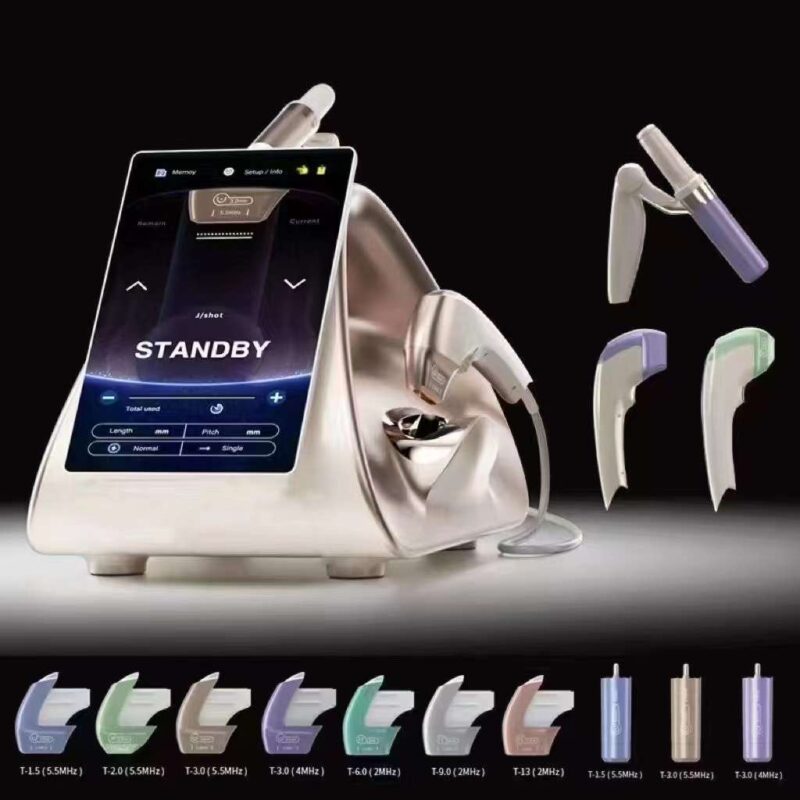
A HIFU Machine is a device that uses highly focused ultrasound energy to target precise layers beneath the skin. In aesthetic applications, that energy is delivered into selected tissue depths to create thermal or mechanical effects without cutting the skin surface. The FDA describes focused ultrasound stimulator systems for aesthetic use as devices that can produce localized heating for tissue coagulation or mechanical cellular membrane disruption for non-invasive aesthetic use.
What HIFU Stands For
HIFU means High-Intensity Focused Ultrasound. The phrase sounds technical, but the concept is actually easy to understand. Ultrasound waves are concentrated into very small focal points below the skin. Where those waves converge, energy is released into tissue at a controlled depth.
The Basic Idea Behind the Technology
I usually explain it like this: instead of affecting the entire skin surface, HIFU tries to deliver energy where it is most useful. In facial rejuvenation, published dermatology literature describes focused ultrasound creating discrete zones of thermal injury in deeper tissue layers, including the dermis and deeper structural planes, while leaving the outer skin relatively undisturbed. Other published reviews describe this process as a trigger for neocollagenesis and elastin remodeling, which supports tightening and lifting over time.
For clinic owners, that makes HIFU attractive because patients often want exactly that combination: no incision, no peeling, no stitches, and a “natural improvement” story they can accept.
How a HIFU Machine Works in Aesthetic Treatments
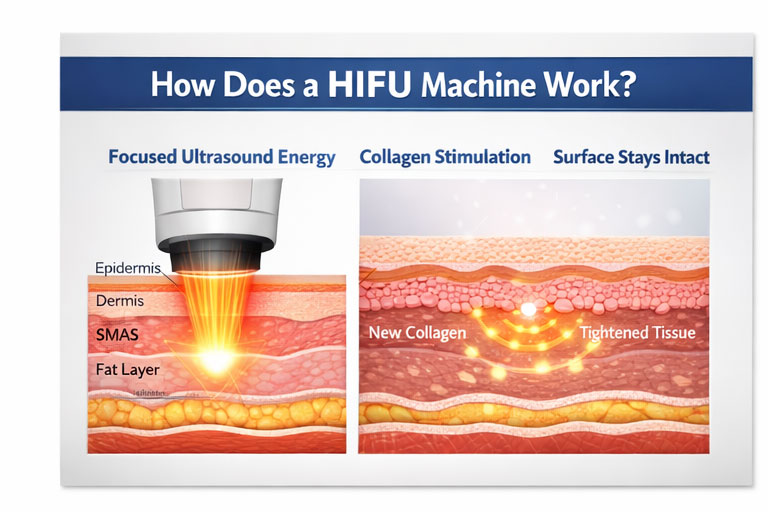
Focused Ultrasound Energy
A HIFU system sends ultrasound energy into a fixed focal point at a selected depth. Different cartridges or transducers are often used for different treatment depths, afhankelijk van het te behandelen gebied en het beoogde gebruik van de fabrikant. Door de FDA goedgekeurde apparaatoverzichten voor esthetische HIFU-systemen laten zien dat sommige platforms zijn ontworpen om zich op bepaalde diepten op weefsel onder de buitenste dermis te richten, en andere zijn geïndiceerd voor niet-invasieve vermindering van onderhuids vet bij toepassingen voor lichaamscontouren.
In praktische kliniektermen, dat betekent dat één apparaat kan worden geoptimaliseerd voor gezichtslifting en rimpelvermindering, terwijl een ander misschien beter geschikt is voor het verkleinen van de tailleomtrek of het vormen van lichaamscontouren. Ik ga er nooit van uit dat “HIFU” automatisch één universele behandelfunctie betekent.
Collageenstimulatie en weefselverstrakking
Een van de belangrijkste redenen waarom HIFU populair is in de esthetiek is de relatie met de remodellering van collageen. In gepubliceerde klinische literatuur wordt beschreven dat microgericht ultrageluid focale verhitting veroorzaakt die neocollagenese en hermodellering van elastine stimuleert. Andere dermatologische bronnen beschrijven de door hitte gestimuleerde productie en samentrekking van collageen in diepere ondersteunende structuren als onderdeel van het aanspanmechanisme.
Vanuit het standpunt van een kliniekeigenaar, dit is commercieel belangrijk. Patiënten reageren vaak heel goed op uitleg over de behandeling die gebaseerd is op ‘het ondersteunen van de collageenreactie van uw lichaam’ in plaats van op ‘het forceren van een kunstmatige verandering’. Die boodschap voelt natuurlijker en gemakkelijker op de markt te brengen.
Waarom het huidoppervlak intact blijft
Een belangrijk verkoopargument is dat HIFU niet-invasief is. Omdat de energie zich onder het huidoppervlak concentreert in plaats van dat de epidermis breed wordt weggenomen, the top layer is generally left intact during properly delivered treatment. That is one reason why many patients can return to normal daily activities quickly compared with more invasive options. Published reviews and dermatology literature repeatedly describe HIFU as a non-invasive modality with minimal downtime, though adverse effects such as discomfort, transient redness, swelling, or temporary numbness can still occur.
What Treatments a HIFU Machine Can Offer
In my opinion, one of the strongest reasons to invest in a HIFU-machine is versatility. A well-positioned clinic can use the technology to create a premium tightening category inside its treatment menu.
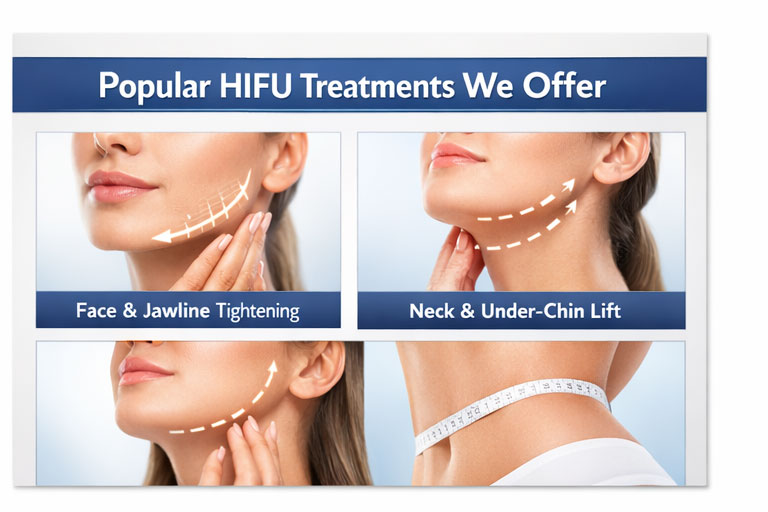
Face and Jawline Tightening
Facial lifting and skin tightening are the most recognized uses. FDA-cleared summaries for some aesthetic focused ultrasound devices include reduction of lines and wrinkles and lifting effects in facial tissue. Clinical studies in dermatology literature have also reported improvements in mid-face, lower-face, facial and neck laxity with micro-focused or intense focused ultrasound treatments.
This is highly relevant for clinic owners because facial rejuvenation is easier to market than many body services. Patients understand jawline definition, cheek support, brow area lifting, and under-chin tightening immediately.
Neck and Under-Chin Treatments
The neck is a common complaint area for aging patients. Many clients do not want surgery, but they do want visible support in loose tissue. HIFU is often used as part of a neck firming strategy, especially for patients with mild to moderate laxity rather than severe skin redundancy. Published sources discussing facial and neck rejuvenation support its role in these areas, though outcomes vary based on anatomy, age, and baseline laxity.
Body Contouring and Firming
Some HIFU platforms are intended for body applications, especially non-invasive waist circumference reduction by disrupting subcutaneous adipose tissue. The FDA’s body contouring overview and specific 510(k) summaries show that some focused ultrasound devices are cleared for waist reduction, not just facial tightening.
This is where I become very careful as a buyer. I always want the exact indication for the exact model. A facial HIFU device is not automatically a body contouring device, en omgekeerd.
Who Is the Ideal Patient for HIFU?
If I were training a front desk or consultation team, I would say the ideal HIFU patient is usually someone who wants improvement, not a surgical-level transformation. In de meeste gevallen, the best candidates are patients with mild to moderate skin laxity, realistic expectations, and a preference for gradual, natuurlijk ogende resultaten.
I would be more cautious with patients who have severe sagging, advanced tissue descent, major skin redundancy, or unrealistic expectations of “one treatment instead of a facelift.” HIFU can be powerful, but it does not replace surgery in every case. Strong consultation language protects both patient satisfaction and clinic reputation.
In my experience, HIFU also fits patients who:
- want non-surgical treatment,
- can tolerate mild to moderate treatment discomfort,
- value low downtime,
- prefer natural-looking tightening,
- and understand that full results may develop over weeks to months rather than overnight.
That gradual-results conversation is important because collagen remodeling is not instant. Some people notice an early tightening effect, but fuller changes typically appear over time as tissue remodeling progresses, which is consistent with published aesthetic literature.
Key Benefits of Adding a HIFU Machine to My Clinic
Non-Surgical Appeal
The first advantage is marketability. Non-surgical services are easier to position for a broad audience. Many patients are curious about lifting treatments but not ready for surgery. HIFU helps fill that gap.
Minimal Downtime
Minimal downtime is a strong business benefit. A treatment that allows patients to return to work or social life quickly is easier to sell, vooral voor drukke professionals.
Hoge waargenomen waarde
HIFU heeft vaak een hoge waarde in de gedachten van de patiënt. De behandeling klinkt geavanceerd, ziet er technisch uit, en pakt zichtbare problemen aan, zoals loszittende kaaklijnen, zwaarte van de wenkbrauwen, en neklaxiteit. Die combinatie kan een gezonde prijsstelling ondersteunen als de resultaten en de kwaliteit van het advies sterk zijn.
Uitgebreid servicemenu
Een kliniek met HIFU kan bundels maken, behandelplannen, en cross-sell mogelijkheden. Bijvoorbeeld, HIFU kan goed samengaan met huidverzorging, injecteerbare producten, RF-gebaseerde behandelingen, en onderhoudsprogramma's.
Merkpositionering
Een goed apparaat zorgt er ook voor dat een kliniek er modern uitziet. Patiënten beoordelen klinieken vaak op basis van zichtbare technologie. Het bezitten van een gerenommeerd platform kan het vertrouwen vergroten, op voorwaarde dat het kliniekteam getraind en zelfverzekerd is.
HIFU-machine versus RF, Laser, en Microneedling
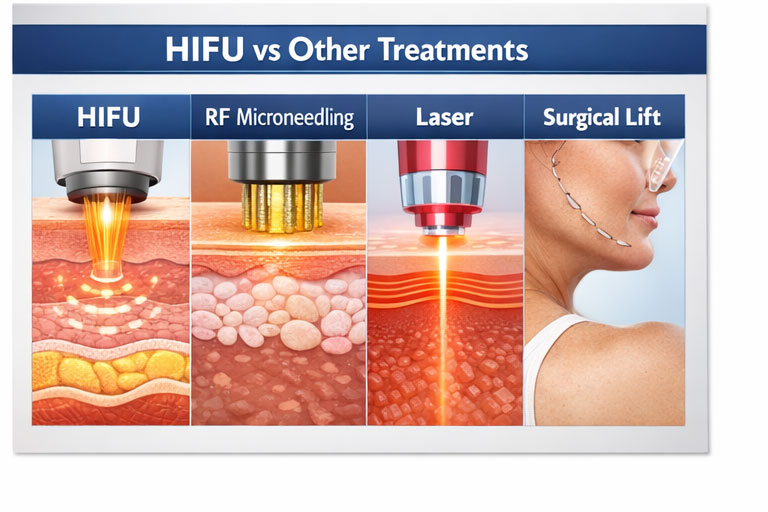
Ik koop nooit een apparaat alleen omdat het indrukwekkend klinkt. Ik vergelijk het met wat ik al aanbied.
| Functie | HIFU | RF-microneedling | Laser | Chirurgische lift |
|---|---|---|---|---|
| Invasiviteit | Niet-invasief | Minimaal invasief | Varieert | Invasief |
| Downtime | Meestal minimaal | Mild tot matig | Varieert | Hoog |
| Hoofddoel | Aanspannen/liften | Textuur + aanscherping | Oppervlak/vasculair/pigment of resurfacing | Grote lift |
| Huidoppervlakletsel | Meestal beperkt | Ja, via naalden | Vaak wel, afhankelijk van laser | Ja |
| Resultaatstijl | Geleidelijk, natuurlijk | Progressief | Afhankelijk van apparaat | Dramatisch |
Gepubliceerde dermatologische bronnen ondersteunen de rol van HIFU bij het aanspannen en tillen van dieper weefsel, terwijl het mechanisme ervan verschilt van op resurfacing gerichte lasers en van op naalden gebaseerde RF-systemen.
Dus, als ik strategisch denk, Ik vraag het niet, “Is HIFU beter dan al het andere?' vraag ik, “Welke leemte in mijn kliniek vult HIFU?" Gebruikelijk, het antwoord is dieper, niet-chirurgisch tillen met relatief weinig hersteltijd.
Waar ik op let voordat ik een HIFU-machine koop
Certifications and Regulatory Status
This is the first thing I check. I want clear documentation, real regulatory status, exact intended use, and country-specific compliance. FDA materials make it clear that focused ultrasound stimulator systems for aesthetic use are not exempt from premarket notification requirements in the U.S., and warning letters show the agency actively monitors marketing claims for devices in this category.
That tells me one simple truth: I should never buy based on sales talk alone.
Cartridge Depths and Treatment Modes
I want to know:
- what depths are available,
- whether the device is designed for facial, nek, or body work,
- how stable the energy delivery is,
- and whether the cartridges are practical and cost-effective.
Training en ondersteuning na verkoop
I consider training non-negotiable. Even strong technology can fail commercially if the operator does not understand anatomy, energy selection, patient selection, en contra-indicaties. FDA-cleared focused ultrasound systems in other specialties also reference successful completion of manufacturer training for operators, which reinforces how important training is for safe use of energy-based devices.
Software, Interface, and Maintenance
A complicated machine slows the team down. I prefer an interface that is easy to learn, logical to navigate, and reliable in daily use. I also ask about servicing, warranty turnaround, cartridge lifespan, and whether local technical support is actually available.
How Much Does a HIFU Machine Cost?
Exact pricing varies widely by brand, feature set, cartridge system, distributor, and region. Because device pricing changes often and depends on supplier packages, I would always request a current written quotation rather than rely on market gossip. In real purchasing terms, total ownership cost includes:
- the base machine,
- treatment cartridges or consumables,
- shipping and import fees,
- opleiding,
- garantievoorwaarden,
- onderhoud,
- and marketing materials.
Veiligheid, Bijwerkingen, and Risk Management
I would never add an energy device to my clinic without a clear safety process. HIFU is generally described in published literature as non-invasive with an acceptable safety profile when used properly, but side effects can still happen. Reported issues can include treatment discomfort, transient redness, swelling, and in some cases temporary numbness or nerve-related irritation.
That means my clinic would need:
- patient screening protocols,
- informed consent,
- contraindication review,
- proper treatment mapping,
- correct energy and depth selection,
- and a clear post-care plan.
I would also make sure the team understands what HIFU is not meant to do. Overselling results is a safety and reputation risk in its own right.
How I Would Choose the Right HIFU Machine Manufactures
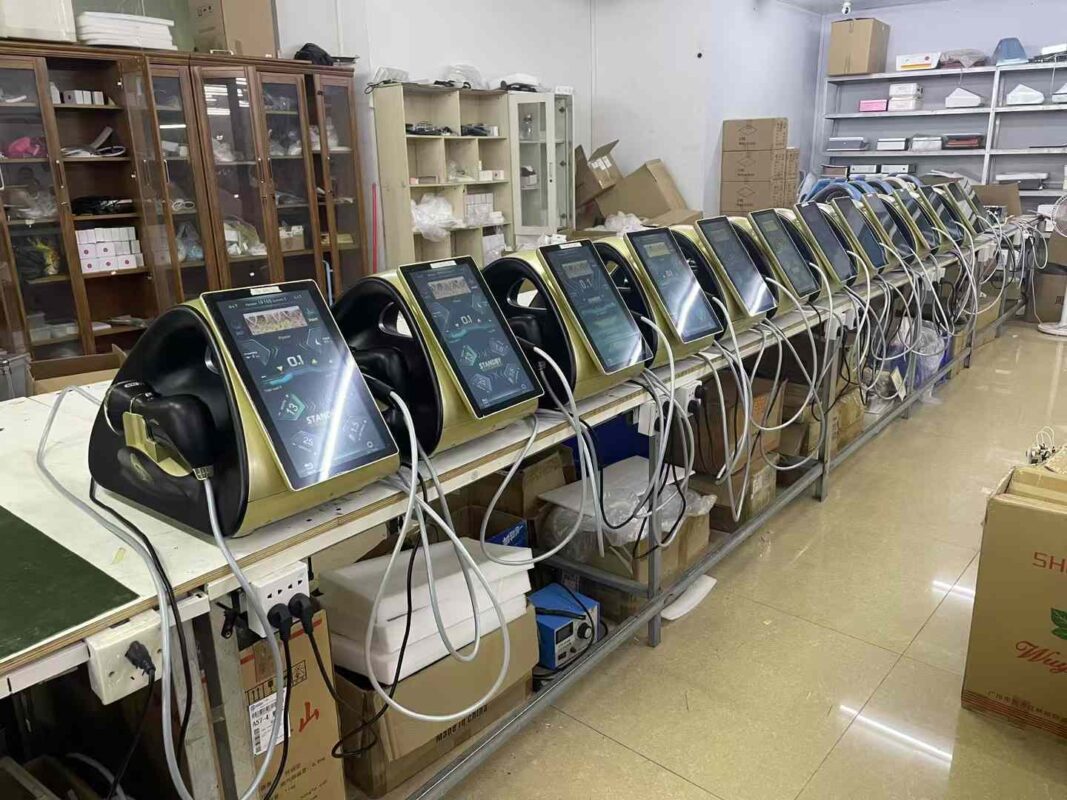
If I were making the final buying call, I would ask the supplier these questions:
- What exact treatments is this model intended for?
- What regulatory documents can you provide?
- What training is included?
- What is the warranty period?
- How fast is technical support?
- What are the cartridge costs and expected lifespan?
- Do you have real case studies or local references?
- What happens if the machine needs repair?
- Do you provide treatment protocols and marketing support?
A trustworthy HIFU Machine Manufacture should answer clearly, not vaguely. For clinic owners, confidence in after-sales support is almost as important as confidence in the machine itself.
Laatste gedachten
Als je het mij vraagt, wat is HIFU-machine? Mijn antwoord is dit: het is een gericht echografieplatform dat esthetische klinieken kan helpen bij het realiseren van niet-chirurgisch tillen, aanscherping, en geselecteerde contourbehandelingen, mits op de juiste manier gebruikt en verstandig aangeschaft. Het is geen magie, en het is geen kortere weg rond overleg, opleiding, of realistische verwachtingen. Maar als ik het vanuit een zakelijk en behandelperspectief bekijk, Ik begrijp absoluut waarom het interesse blijft trekken.
Als ik er een zou kopen voor mijn eigen kliniek, Ik zou me vooral op vier dingen concentreren: veiligheid, indicatie, steun, en winstgevendheid. Een sterke HIFU-machine zou moeten voldoen aan de vraag van mijn patiënt, overeenkomen met de positionering van mijn kliniek, en afkomstig zijn van een leverancier die ik vertrouw. Als die stukken op één lijn liggen, het apparaat kan een waardevol onderdeel worden van een moderne esthetische praktijk.
Veelgestelde vragen
Nee, niet in elk geval. HIFU is best viewed as a non-surgical tightening option for selected patients, not a universal replacement for surgery.
For me, it is the combination of regulatory clarity, real training, reliable support, and a device indication that matches my clinic goals.
Ja, it can be, especially if the clinic targets anti-aging, facial tightening, or premium non-surgical services. The key is choosing a device that matches your patient base and budget.
Treatment time depends on the area and protocol. Smaller facial zones are faster, while full-face or body treatments take longer.
Some patients may notice early tightening, but fuller results often develop gradually over the following weeks or months as collagen remodeling continues.