

Elegir un máquina facial No se trata sólo de añadir otro dispositivo a la sala de tratamiento.. La máquina adecuada puede dar forma a su menú de servicios, fortalecer el posicionamiento del tratamiento, y mejorar la forma en que los clientes experimentan los resultados con el tiempo.
En la práctica, La mejor máquina rara vez es la que tiene más funciones.. Es el que se adapta a tu estilo de tratamiento., tu perfil de cliente, y el tipo de negocio de estética que deseas construir.
Esta guía analiza las máquinas faciales que los esteticistas consideran con mayor frecuencia., para qué es más adecuada cada categoría, y cómo pensar una compra de una manera más práctica.
Por qué son importantes las máquinas faciales en un negocio de estética
Las máquinas faciales ayudan a convertir un menú de servicios básico en un negocio de tratamientos más estructurado. Facilitan la creación de servicios específicos en torno a la limpieza., exfoliación, hidratación, calmante, levantamiento, o renovación de la piel.
También ayudan a crear mejoras de tratamiento más claras.. Un tratamiento facial se vuelve más fácil de colocar cuando los clientes pueden entender qué lo hace diferente, ¿Qué preocupación aborda?, y por qué puede valer la pena reservar nuevamente.
Es por eso que nunca se debe elegir el equipo solo por su apariencia o valor de tendencia.. Una buena máquina debería soportar mejores tratamientos., lógica de servicio más fuerte, y un modelo de negocio más claro.
¿Qué hace que una máquina facial sea “mejor” para los esteticistas??
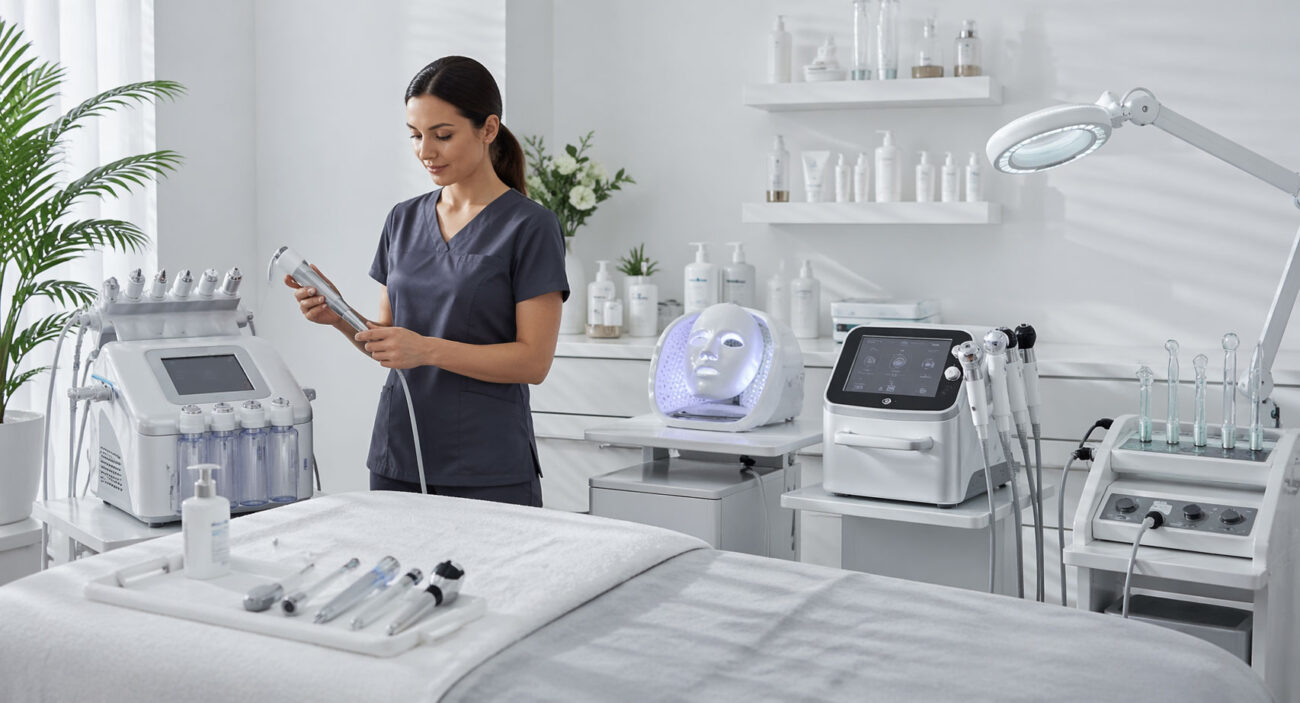
No existe una mejor máquina para cada esteticista. Un estudio facial en solitario, una barra de piel centrada en resultados, y un spa más grande pueden necesitar equipos muy diferentes.
en la mayoría de los casos, la máquina adecuada hace tres cosas bien. Se adapta a las inquietudes más comunes de los clientes en la sala de tratamiento.. Es fácil de integrar en el flujo de servicios real.. Y es bastante sencillo de explicar y vender con confianza..
El lado comercial también importa. Algunas máquinas parecen avanzadas pero son difíciles de ubicar. Otros son más fáciles de entender para los clientes., más fácil de usar para el personal, y más fácil de convertir en paquetes de tratamiento repetibles.
1. Máquinas de hidrodermoabrasión
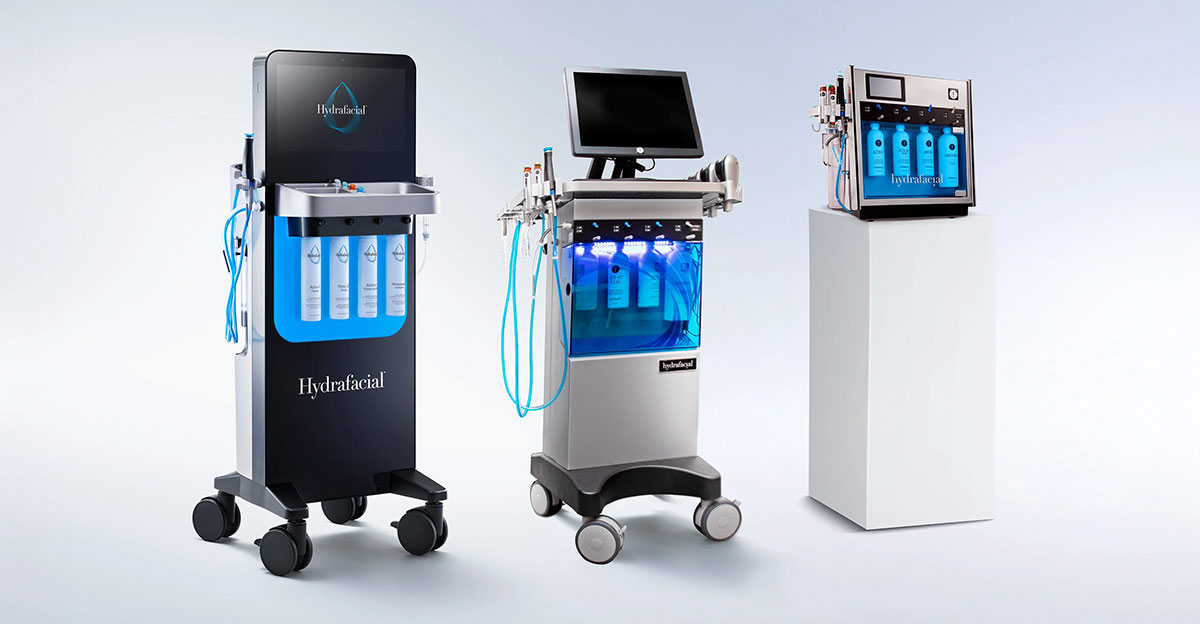
La hidrodermoabrasión sigue siendo una de las opciones más prácticas para los esteticistas.. Combina limpieza, exfoliación, succión, e infusión de suero en un formato que se siente moderno pero aún fácil de entender para los clientes.
Esta categoría funciona especialmente bien para necesidades de tratamiento comunes como el embotamiento., congestión, deshidración, y mantenimiento facial de rutina. También se adapta a una amplia base de clientes., lo que lo hace útil para salas de tratamiento que necesitan un amplio atractivo comercial.
Desde una perspectiva empresarial, Esta es a menudo una de las máquinas más fáciles de crear servicios.. Puede soportar tratamientos faciales exprés., tratamientos faciales mejorados, tratamientos mensuales, y servicios básicos para la piel sin sentirse demasiado técnico.
2. Dispositivos de terapia de luz LED
El LED es una de las máquinas más adaptables en un entorno estético.. Puede que no siempre sea el tratamiento principal, pero encaja de forma natural en muchos protocolos faciales y suele añadir valor sin complicar el servicio.
Se utiliza comúnmente en tratamientos faciales centrados en el acné., tratamientos calmantes, y apoyo post-tratamiento. Esa flexibilidad lo hace atractivo para los esteticistas que desean un dispositivo que pueda funcionar en diferentes tipos de tratamientos en lugar de servir solo a un nicho..
Otra razón por la que el LED sigue siendo popular es que es relativamente fácil de colocar.. Los clientes suelen entender la idea del soporte cutáneo basado en luz., especialmente cuando se presenta como parte de un plan facial más amplio en lugar de como un tratamiento milagroso independiente.
3. Máquinas de microcorriente
La microcorriente a menudo se considera cuando una sala de tratamiento quiere ofrecer más servicios de elevación y tonificación.. Atrae a clientes que desean una apariencia más esculpida o renovada sin pasar a categorías de tratamiento más agresivas..
En la práctica estética real, La microcorriente tiende a funcionar mejor cuando las expectativas son claras.. Suele ser más fácil posicionarlo como parte de una serie., un programa de mantenimiento, o un complemento a un tratamiento facial antienvejecimiento que como una transformación dramática única.
Para esteticistas que desean una mejora facial más premium, La microcorriente a menudo tiene sentido porque se siente avanzada y al mismo tiempo encaja en un modelo de servicio orientado al spa..
4. Máquinas de alta frecuencia
La alta frecuencia sigue siendo relevante porque es simple., familiar, y fácil de incorporar en tratamientos faciales clásicos. Es especialmente común en pieles grasas., piel propensa a imperfecciones, y protocolos post-extracción.
Esta no suele ser la máquina que define por sí sola un menú de tratamientos de lujo. Aún, sigue ganándose su lugar porque es práctico, accesible, y fácil de usar en el trabajo estético cotidiano..
Para esteticistas nuevos o salas de tratamiento con un presupuesto de equipo menor, la alta frecuencia aún puede ser una adición útil y realista.
5. Depuradores cutáneos ultrasónicos y dispositivos de ultrasonido tópicos
Esta categoría a menudo recibe menos atención de la que merece.. Los depuradores cutáneos ultrasónicos y los dispositivos tópicos relacionados pueden favorecer la limpieza, exfoliación ligera, y aplicación del producto de una manera que se sienta suave y amigable con el servicio.
Son especialmente útiles cuando el objetivo es mejorar el flujo de tratamiento en lugar de crear un servicio principal altamente comercializable.. En muchas salas faciales, Ese tipo de practicidad importa más que el valor de la tendencia..
Estos dispositivos pueden funcionar bien para clientes que no toleran una exfoliación agresiva o que prefieren una más suave., experiencia de tratamiento más cómoda.
6. Dispositivos faciales de radiofrecuencia
La radiofrecuencia entra en la conversación cuando una empresa quiere expandirse más seriamente hacia tratamientos reafirmantes y de rejuvenecimiento.. A menudo se posiciona como un paso por encima del equipo facial estándar y generalmente viene con una imagen de tratamiento más avanzada..
Eso también significa que requiere una evaluación más cuidadosa.. Capacitación, protocolos de tratamiento, contraindicaciones, calidad del dispositivo, y las reglas locales son mucho más importantes en esta categoría que con equipos faciales más simples..
Para algunas empresas, La RF puede ser una gran adición. Para otros, puede que esté demasiado avanzado, demasiado regulado, o demasiado difícil de integrar bien en la etapa actual.
7. HIFU y sistemas de ultrasonido enfocado
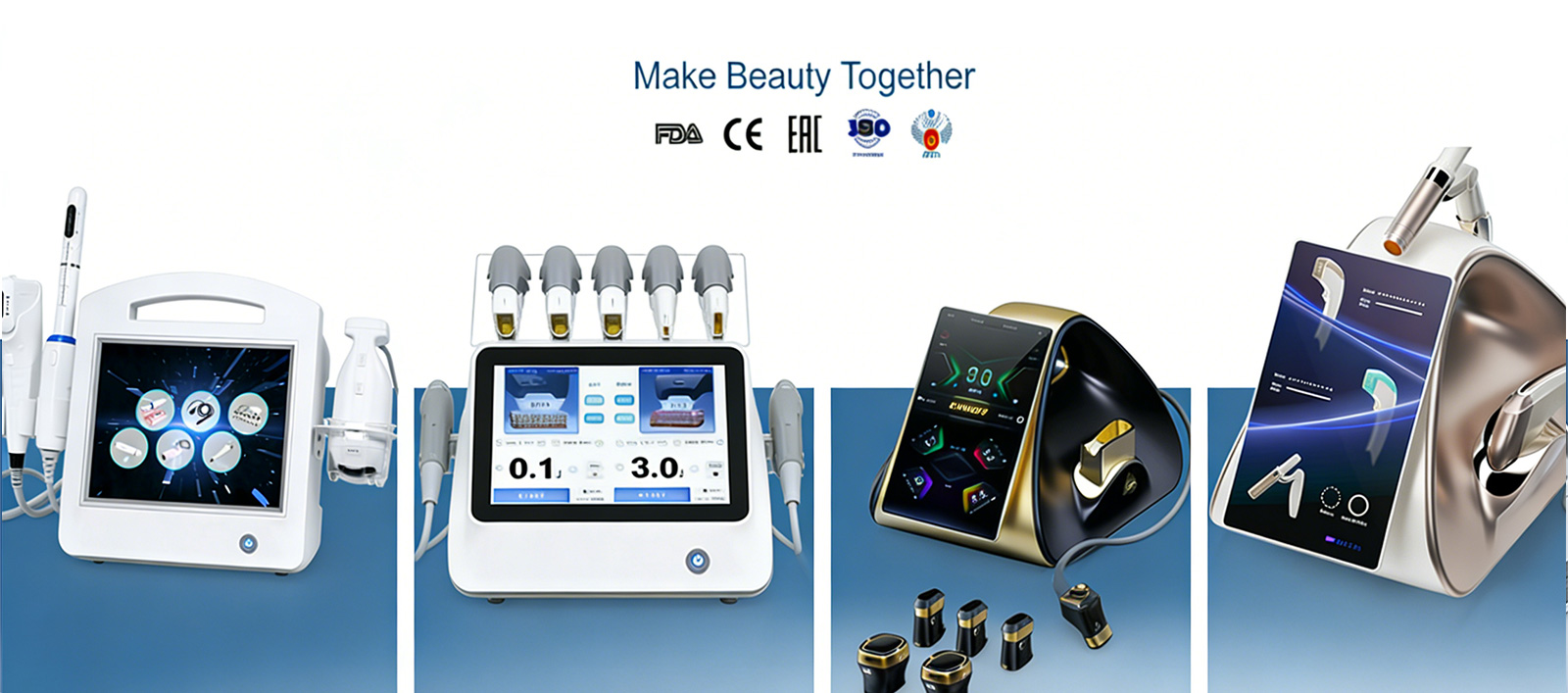
HIFU y sistemas de ultrasonido enfocado similares se ubican aún más arriba en la escala de complejidad. Generalmente están asociados con el endurecimiento., levantamiento, y tratamientos más avanzados centrados en la apariencia.
Estos sistemas no son el siguiente paso obvio para todos los esteticistas.. Requieren una mirada mucho más cuidadosa a la formación, alcance del tratamiento, seguridad, y el posicionamiento empresarial antes de la compra se vuelve realista.
En muchos casos, Tienen más sentido para entornos estéticos avanzados que para una sala facial estándar que busca su próxima inversión práctica en máquinas..
8. Plataformas láser e IPL
Los dispositivos láser e IPL suelen ser atractivos debido a su fuerte reconocimiento en el mercado.. Los clientes conocen los nombres., y las categorías de tratamiento pueden parecer comercialmente poderosas..
Al mismo tiempo, Estas plataformas vienen con un nivel mucho mayor de complejidad.. No son simplemente otro complemento de la sala facial.. Por lo general, requieren una consideración más profunda en torno a las licencias., supervisión, capacitación, seguridad, y modelo de tratamiento general.
Es por eso que deben evaluarse de manera muy diferente a los equipos faciales estéticos más típicos.. Para algunas empresas pueden encajar bien, pero no son automáticamente la mejor opción para una práctica dirigida por un esteticista.
Cómo elegir la máquina facial adecuada
Una decisión de compra inteligente comienza con la sala de tratamiento, no el folleto. Antes de mirar las características, Es útil observar lo que los clientes realmente reservan., qué preocupaciones aparecen con más frecuencia, y por qué tipo de servicios la empresa quiere ser conocida.
También ayuda preguntar si la máquina es fácil de explicar.. Un dispositivo puede parecer impresionante, pero si los clientes no comprenden rápidamente el beneficio, puede ser más difícil convertirlo en ingresos estables.
Capacitación, mantenimiento, apoyo, consumibles, y el flujo de trabajo también deben ser parte de la decisión. Una máquina sólo adquiere valor cuando se puede utilizar de forma coherente, vendido claramente, e integrarse sin problemas en la práctica de tratamiento real.
Las mejores máquinas faciales por objetivo comercial
Si el objetivo es un amplio atractivo para el cliente, hidrodermoabrasión, CONDUJO, y los dispositivos tópicos ultrasónicos suelen ser puntos de partida sólidos. Estas categorías son más fáciles de entender y de integrar en los servicios faciales cotidianos..
Si el objetivo es un tratamiento orientado al acné, CONDUJO, frecuencia alta, y la hidrodermoabrasión suelen ser más prácticas que saltar directamente a plataformas más avanzadas. Se ajustan a rutinas de tratamiento comunes y respaldan las inquietudes que los clientes suelen traer a la sala..
Si el objetivo son las actualizaciones antienvejecimiento, La microcorriente es a menudo una de las opciones más accesibles.. Le da al menú de servicio un ángulo de elevación y tonificación más fuerte sin pasar inmediatamente a categorías de equipos mucho más pesados..
Si el objetivo es construir un menú de tratamientos más avanzado, categorías como RF, HIFU, o sistemas basados en láser pueden entrar en consideración más adelante. Incluso entonces, la decisión debe tomarse sólo después de que el negocio encaje, nivel de entrenamiento, y el contexto regulatorio han sido considerados cuidadosamente.
Pensamientos finales
Las mejores máquinas faciales para esteticistas suelen ser aquellas que equilibran el valor del tratamiento con la practicidad comercial.. Deben adaptarse a las necesidades reales de la sala de tratamiento., no sólo la idea de lo que parece avanzado.
Para muchos esteticistas, Eso significa comenzar con categorías de máquinas que sean versátiles., fácil de integrar, y fácil de colocar. Hidrodermoabrasión, CONDUJO, microcorriente, frecuencia alta, y los dispositivos ultrasónicos a menudo tienen más sentido comercial que apresurarse hacia sistemas más complejos demasiado pronto.
Una buena máquina debería ayudarle a hacer más que ofrecer otro servicio.. Debería ayudar a crear una lógica de tratamiento más clara., negocio repetido más fuerte, y un menú de servicio que se siente más intencional.
Si aún no estás seguro de qué máquinas de cuidado facial elegir, siéntete libre de contacta con uangelcare. Con años de experiencia en el desarrollo de Máquinas de belleza. , Estamos seguros de que podemos ayudarle a encontrar las mejores máquinas de cuidado facial para sus necesidades..
Preguntas frecuentes
La hidrodermoabrasión y el LED suelen estar entre los puntos de partida más prácticos.. Son más fáciles de integrar, más fácil de entender para los clientes, y más fácil de incorporar a los servicios faciales cotidianos.
puede ser. La microcorriente suele ser una buena opción para los menús faciales antienvejecimiento., especialmente cuando se presenta como parte de un plan de tratamiento o programa de mantenimiento en lugar de un resultado dramático único.
Sí, en muchas salas de tratamiento son. La alta frecuencia sigue siendo útil porque es simple, familiar, y fácil de agregar a los flujos de trabajo faciales, Especialmente para protocolos de piel grasa o propensa a imperfecciones..
Un mejor ajuste casi siempre importa más. Una máquina más simple que se adapta al menú de servicios y a la base de clientes generalmente funciona mejor que una máquina más compleja que es difícil de usar o de vender..