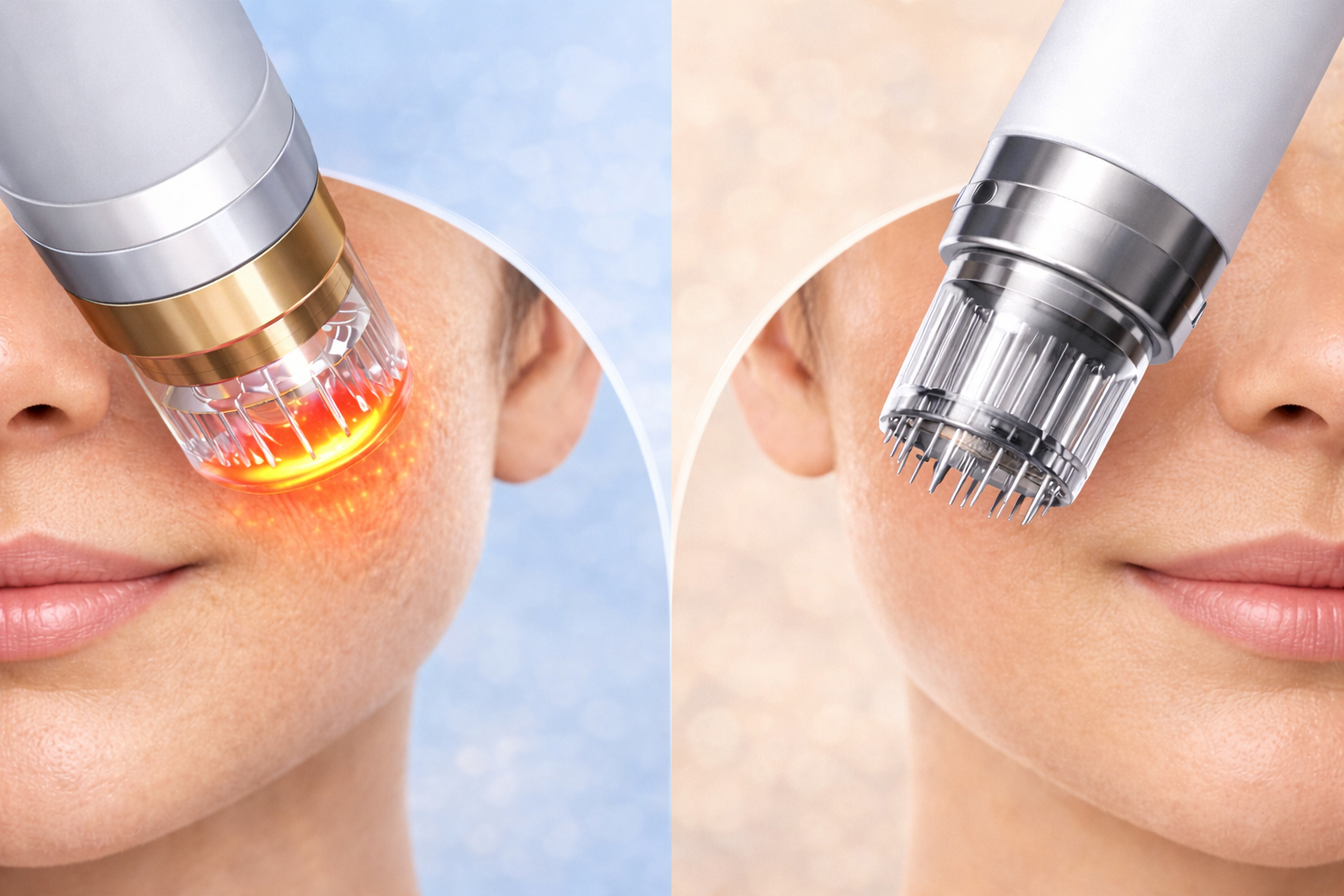


A lot of people seem to think that RF microneedling and traditional microneedling are the same thing. It’s easy to see why. Both use tiny needles, both help with collagen support, and both are often used to make skin look better by improving its texture, porene, and early signs of ageing.
But if you look deeper, the difference becomes much more important.
Controlled mechanical stimulation is how traditional microneedling works. RF microneedling builds on that idea by adding radiofrequency energy to the skin. This makes the treatment seem more advanced for deeper remodelling and tightening support.
So which one is better?
It depends on what the problem is that is being treated. For some people, regular microneedling is all they need. RF microneedling might be a better choice for some people, especially if they want to do more than just improve the texture of their skin. They might also want to make it firmer, get rid of wrinkles, or deal with deeper acne scars.
I denne veiledningen, I want to explain the real difference between RF microneedling and traditional microneedling, where each one works best, and how to make the choice more clear.
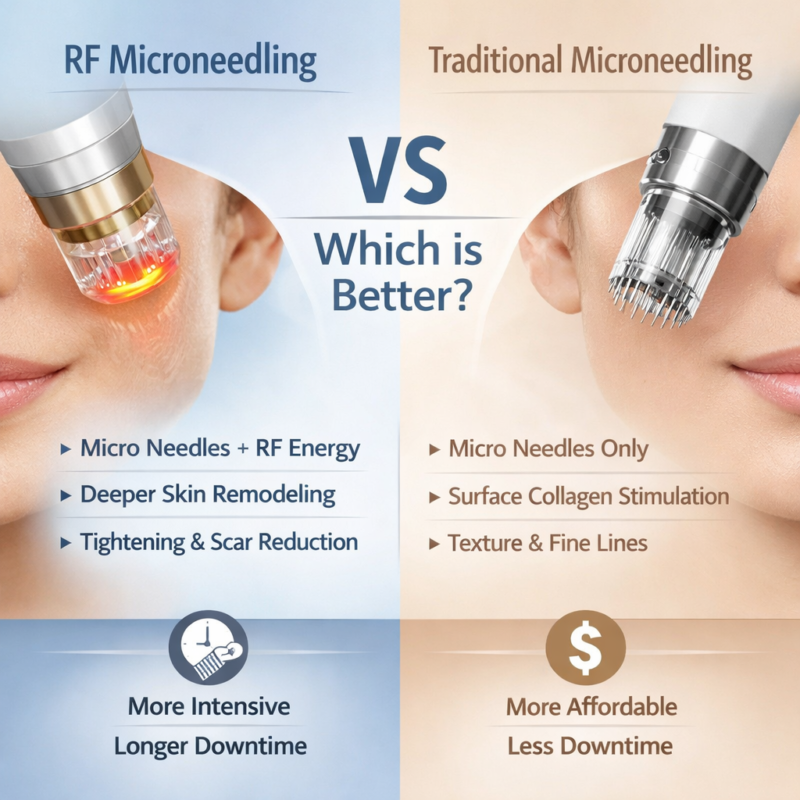
What Is Traditional Microneedling?
Fine needles are used in traditional microneedling to make controlled microchannels in the skin. The purpose of these tiny holes is to get the skin’s natural healing process going and help collagen grow back over time.
People often talk about it when they have problems like uneven texture, big pores, mild acne scars, dullness, and fine lines. One reason it is still widely used is that it is a fairly simple way to make collagen. People who want to improve their skin without having surgery often choose it because it doesn’t require a lot of technology.
When the goal is to improve the texture and quality of the skin in a more accessible way, traditional microneedling can be very appealing.
What is RF microneedling?
Radiofrequency microneedling, eller RF microneedling, adds radiofrequency energy to the same needle-based treatment to reach deeper layers of skin.
The added heat changes where the treatment is placed. RF microneedling adds controlled thermal stimulation to mechanical micro-injury. This combination is often linked to more intense collagen remodelling, which is one of the main reasons it comes up a lot when people talk about skin tightening and other visible rejuvenation goals.
People often think about RF microneedling for problems like acne scars, rynker, grov hud, big pores, and mild skin laxity. In other words, it is usually brought up when the skin problem is not just about unevenness on the surface, but also about firmness and deeper support.
What is the main difference between RF microneedling and regular microneedling?
This is how I would explain the difference in the simplest way possible:
Needles are the only thing that traditional microneedling uses. Radiofrequency energy and needles are both used in RF microneedling.
It may seem like a small difference, but it really changes the focus of the treatment.
Traditional microneedling usually focuses more on inducing collagen through controlled physical stimulation. RF microneedling is often thought of as a more comprehensive treatment because it combines the same stimulation with heat-based energy that may help with deeper remodelling.
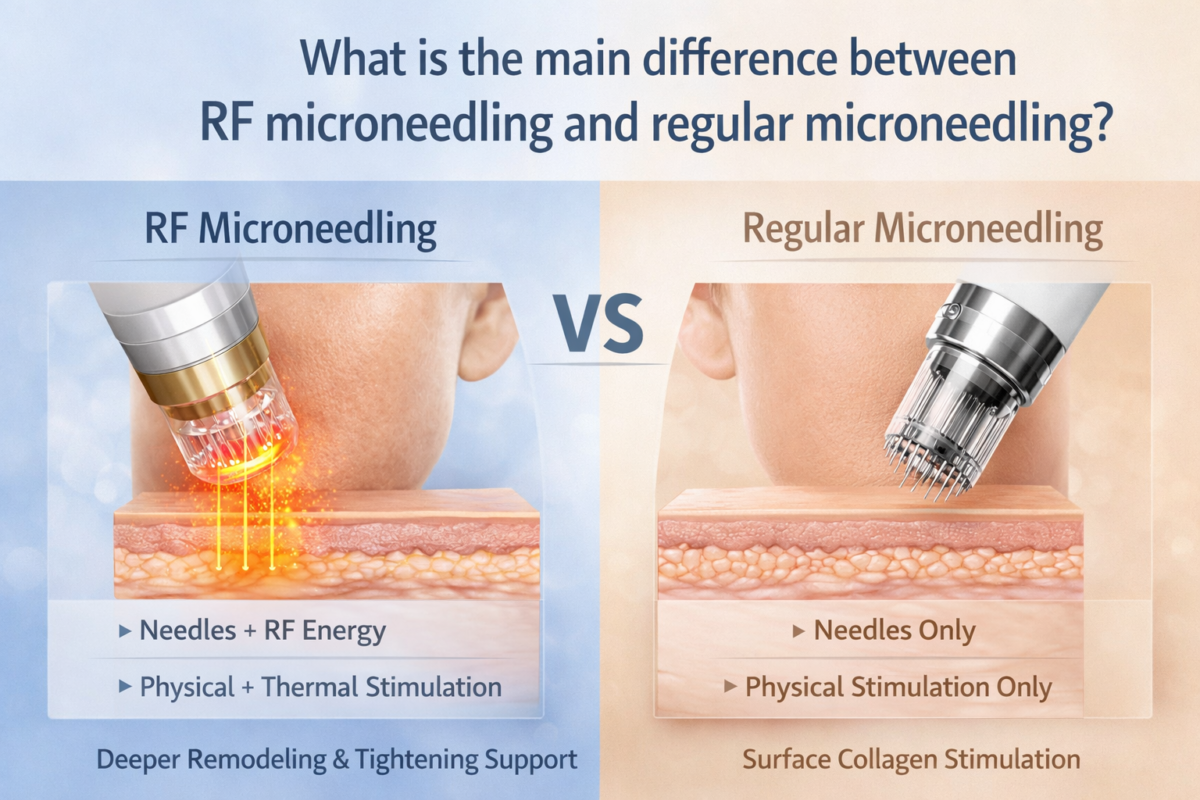
Needles Only vs. Needles Plus Radiofrequency Energy
Microneedling the old-fashioned way makes tiny cuts in the skin that make it heal faster. RF microneedling does that too, but it also adds heat energy below the surface.
For many patients and providers, the extra energy is what makes RF microneedling feel like a different type of treatment.
Collagen support on the surface vs. remodelling deeper down
People often think of traditional microneedling as a way to improve texture, make skin smoother, and support collagen in general. People talk about RF microneedling more when they want to do more than just renew the surface, especially when firmness and tightening are also goals.
People who compare the two treatments are usually trying to figure out if they need a simpler collagen-stimulation treatment or a more advanced remodelling-focused one.
Advantages of Conventional Microneedling
I don’t think traditional microneedling should be seen as the “lesser” option just because RF technology is more common now.
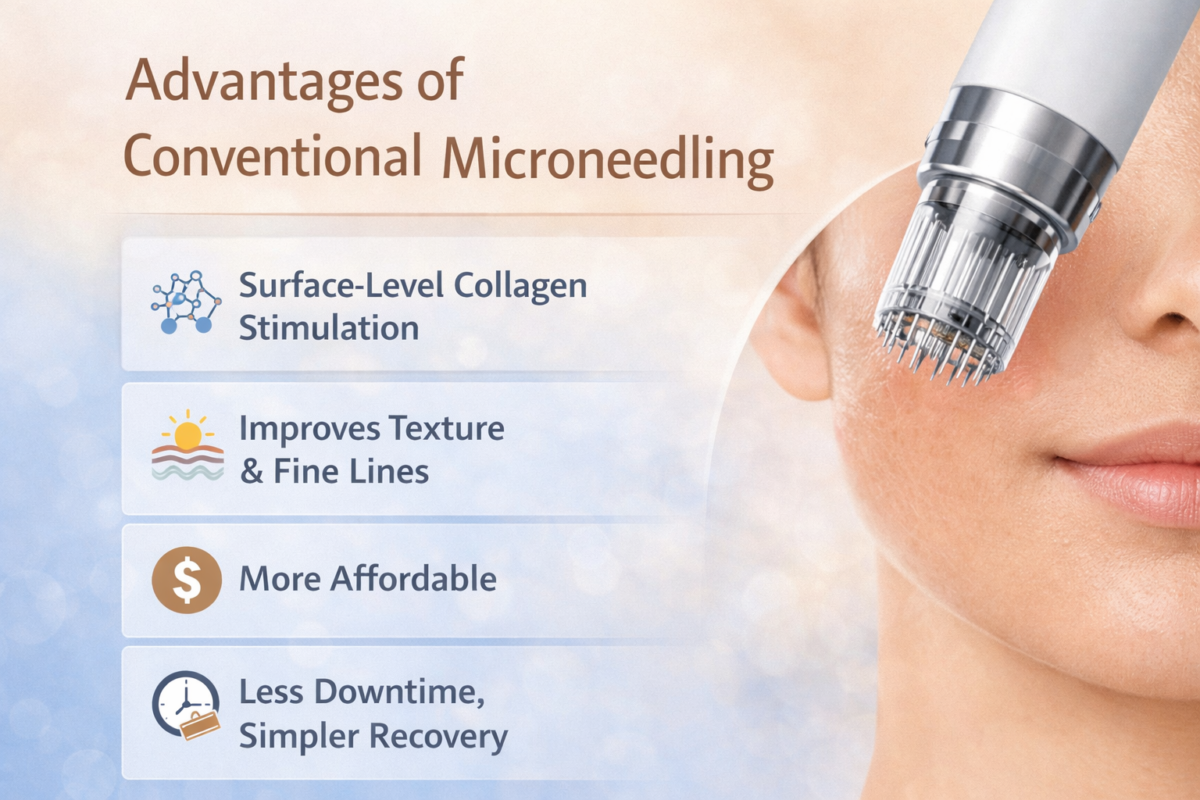
A Simpler Way to Renew Your Skin’s Texture
People with mild to moderate texture problems may only need traditional microneedling. People often choose it for pores, fine linjer, matt hud, and less severe acne scars.
Why It Is a Good Choice for Mild to Moderate Skin Problems
Another benefit is that it is usually easier to get treatment for and costs less. Traditional microneedling can be a good choice for someone who is new to professional skin care or who wants to start with something they are more comfortable with.
In a lot of cases, it’s still a good option for collagen support without having to pay more for a more expensive energy-based treatment.
Benefits of RF Microneedling
RF microneedling is often marketed as a more advanced option, and that is usually because it uses radiofrequency energy.
Why people often use RF microneedling to tighten their skin
One of the main reasons RF microneedling is often linked to firmer-looking skin and rejuvenation that focuses on tightening is because of the thermal component. When early laxity is a concern, traditional microneedling and RF microneedling are no longer doing the same thing.
How It Helps Treatments for Acne Scars and Wrinkles
RF microneedling is also often talked about for acne scars and wrinkles that are more noticeable, especially when they seem to be deeper or harder to treat with simpler resurfacing methods.
That doesn’t mean it’s the best option for everyone. People who want a more intense treatment often see RF microneedling as the next step.
What is better for scars from acne?
This is one of the most common reasons why people compare these two treatments.
Microneedling in the traditional way can help with mild to moderate acne scars and make the skin feel smoother overall. But when acne scars look deeper, more uneven, or harder to fix, RF microneedling is often thought to be the better choice.
It’s not too hard to figure out why. It combines the benefits of microneedling with deeper heat-based stimulation. This is why it is so often talked about in treatment plans for scars.
So, if the question is which one is better for acne scars that won’t go away, RF microneedling is usually the better choice. If the problem isn’t too bad, traditional microneedling might still be a good option.
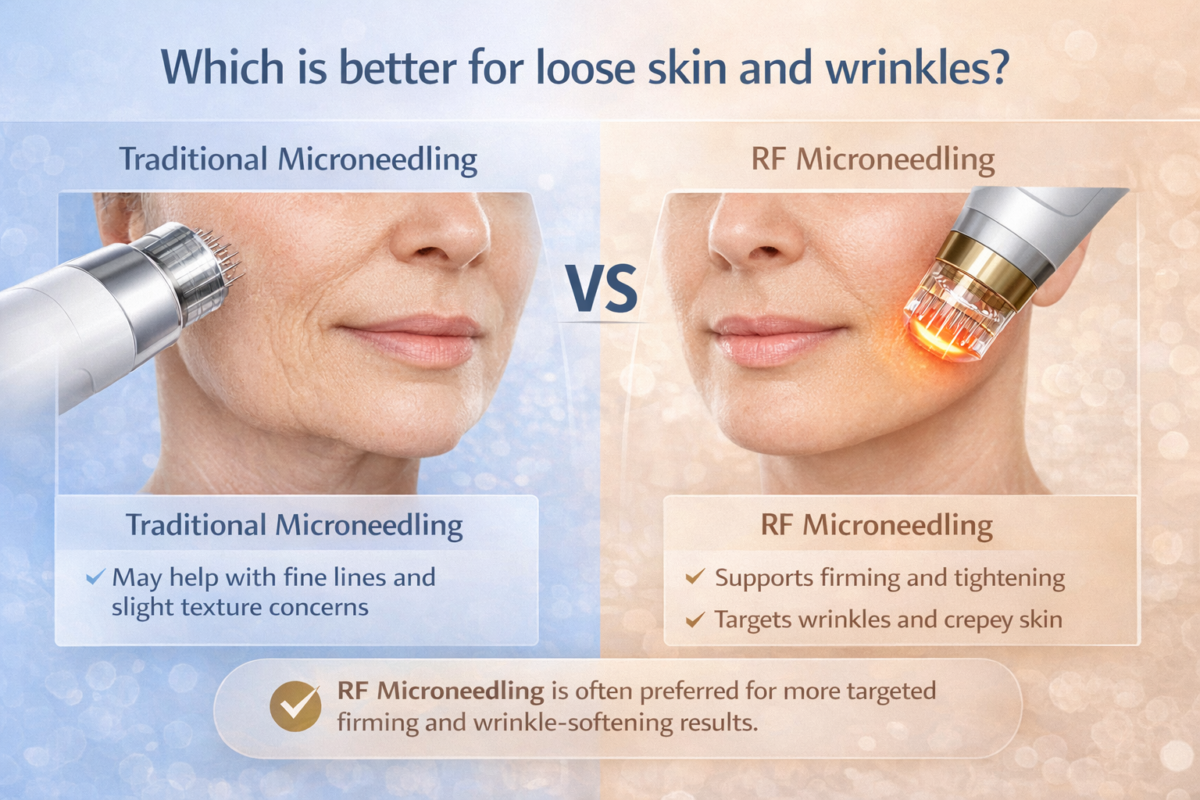
Which is better for loose skin and wrinkles?
RF microneedling usually stands out more clearly when people talk about firmness.
Traditional microneedling can help make skin look smoother and may help with fine lines over time. Imidlertid, RF microneedling is usually the better choice for results that focus on softening and tightening wrinkles.
So, if you just want to improve the texture, traditional microneedling might be enough. RF microneedling is often thought to be a better treatment for skin that is starting to sag or look crepey, as well as for skin that has a rough texture.
RF Microneedling vs Traditional Microneedling: Downtime and Recovery
There is no one-size-fits-all answer to how long it will take to heal after treatment. It depends on how intense the treatment was, how deep the needles went, how sensitive the skin is, and how well the patient takes care of themselves.
That being said, people often think that traditional microneedling is easier to recover from. This is because it combines puncture with heat, which may cause a stronger response.
In either case, support for recovery is important. After treatment, it’s important to use gentle cleansers, products that focus on hydration, and care that supports the skin’s barrier and to avoid irritation. As the procedure gets more complicated, skin support after treatment becomes more important.
The Price Difference Between RF Microneedling and Regular Microneedling
RF microneedling usually costs more than regular microneedling.
That has to do with the technology of the device, the way the treatment is positioned, and the fact that RF is usually marketed as a more expensive option for tightening and improving texture. People who want professional skin renewal without paying a lot of money can usually afford traditional microneedling.
But the more useful question is not just which one costs less. The question is whether the extra benefit of RF microneedling is useful for the skin problem being treated.
How to Choose Between RF Microneedling and Traditional Microneedling
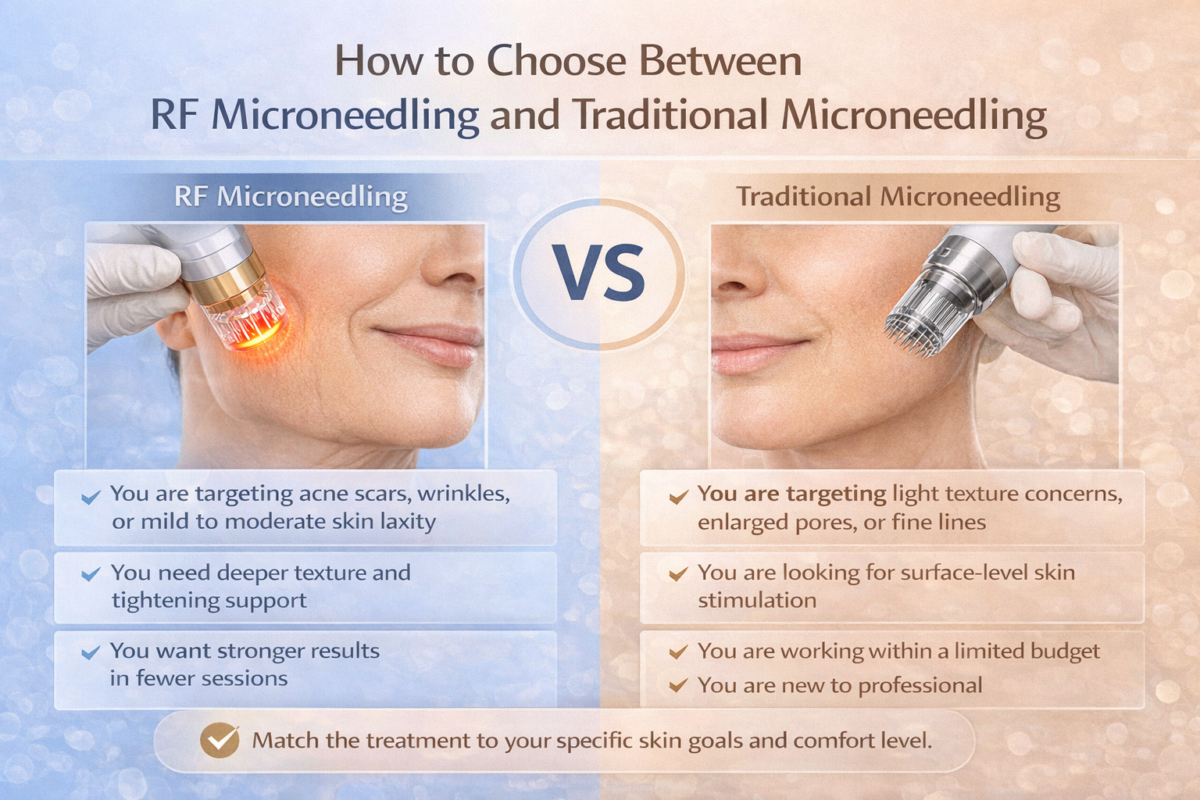
I think the best way to choose is to match the treatment to the goal.
If the problem is mild texture, visible pores, dullness, or fine lines that are just starting to show up, traditional microneedling may be enough.
If the problem is deeper acne scars, rynker, or loose skin, RF microneedling might be a better choice.
The choice that sounds more advanced is usually not the best one. It is the one that fits the skin condition, budget, recovery goals, and overall treatment goal the best.
Final Thoughts: Which Microneedling Treatment Is Better?
There is a connection between RF microneedling and traditional microneedling, but they are not the same thing.
Traditional microneedling is still a good choice for collagen support, improving the texture of the skin, and general rejuvenation. RF microneedling takes that idea a step further by adding radiofrequency energy. That’s why it’s often used for problems that have to do with deeper remodelling and firmness.
So what is better?
For simpler skin-renewal goals and a more accessible treatment path, I would say that traditional microneedling is often better. If you want a more advanced option, RF microneedling is often better, especially if you have acne scars, rynker, or early skin laxity.
In the end, the better comparison isn’t about picking the treatment with the best name. It’s about picking the one that really works for what you want.