

I have seen many clinic owners make the same mistake when buying a beauty machine. They focus too much on what looks new, what sounds advanced, or what seems popular on social media, and not enough on whether the machine truly fits their clinic model.
A beauty machine is not just a piece of equipment. It affects your treatment menu, client experience, staff workflow, pricing structure, and long-term profitability. Choosing the wrong one can lead to poor treatment fit, underused equipment, training problems, and disappointing returns. Choosing the right one can help your clinic attract better clients, improve treatment results, and build a stronger service identity.
In questa guida, I want to break the process down in a practical way. Whether you run a skincare clinic, spa, medi-spa, facial studio, or aesthetic center, these are the factors I would evaluate before investing in any beauty machine.
Why Choosing the Right Beauty Machine Matters
The beauty device market is full of options. You can find machines for facial cleansing, rassodamento della pelle, infusione di idratazione, hydro dermabrasion, RF lifting, oxygen therapy, ultrasound care, LED treatments, microcurrent, elettroporazione, e altro ancora.
But the best machine is not always the one with the most functions.
The best beauty machine for a clinic is usually the one that fits these five things well:
- your core treatment direction
- your target client profile
- your staff skill level
- your pricing strategy
- your expected return on investment
A clinic that focuses on entry-level facial services may need something very different from a premium anti-aging clinic. A spa that wants relaxing, repeatable treatments may choose differently from a results-driven aesthetic studio. That is why buying based on hype alone is risky.
Start with Your Clinic Positioning First
Before comparing machine specifications, I would start with a more basic question:
What kind of clinic are you building, and what kind of treatments do you want to be known for?
This is where many buying decisions should begin.
Common clinic positioning examples
Some clinics are mainly focused on:
- deep cleansing and routine skin maintenance
- hydration and glow treatments
- anti-aging and skin firming
- acne-prone and oily skin management
- post-treatment soothing and repair support
- premium facial experiences with higher service value
- multi-step customized facial packages
If your clinic is known for fast, affordable maintenance facials, a highly complex machine may not be the right investment. If your clinic wants to build a higher-ticket treatment menu around lifting, contornatura, and long-term skin improvement, then a basic cleansing device may not support that business model.
UN beauty machine should strengthen your clinic positioning, not confuse it.
Define the Treatment Goals You Want to Offer
The next step is to be very clear about your treatment goals. I usually find it helpful to think in terms of treatment outcomes rather than machine names.
For example, ask yourself:
- Do I want to improve deep cleansing and blackhead care?
- Do I want to offer more hydration-focused treatments?
- Do I want lifting and firming to become a core category?
- Do I want a machine that supports sensitive skin protocols?
- Do I want to add treatment upsells to existing facials?
- Do I want one hero machine or a flexible multi-function platform?
Match goals to treatment directions
Here is a simple way to think about it:
If your goal is cleansing and extraction support, hydro dermabrasion, aqua facial, or vacuum-based cleansing machines may be relevant.
If your goal is hydration and infusion, elettroporazione, oxygen infusion, ultrasound support, or serum delivery systems may fit better.
If your goal is anti-aging and firming, radiofrequenza, microcurrent, ultrasound-based lifting support, or skin rejuvenation platforms may be more suitable.
If your goal is soothing and recovery-focused care, LED light therapy and gentler infusion technologies may make more sense.
The point is not to chase every possible treatment category. The point is to choose a machine that supports the results your clients actually come to you for.
Know Your Target Client Before You Buy
A beauty machine should match your client base just as much as your treatment menu.
If most of your clients are younger and come in for cleansing, controllo dell'olio, glow, and texture improvement, you may not need to invest heavily in high-ticket anti-aging equipment right away.
If your clinic serves clients in their 35s, 40s, and 50s who are actively looking for skin tightening and visible rejuvenation support, then devices with firming or lifting-oriented treatment value may have stronger business potential.
Ask these questions about your audience
- What age group makes up most of my bookings?
- What skin concerns do my clients mention most often?
- Are my clients price-sensitive or quality-driven?
- Do they prefer quick maintenance treatments or more advanced programs?
- Are they looking for visible treatment outcomes, relax, or both?
A machine that fits your target client will always perform better than a machine that only sounds impressive on paper.
Single-Function vs Multi-Function Beauty Machines
This is one of the most common decisions clinic owners face.
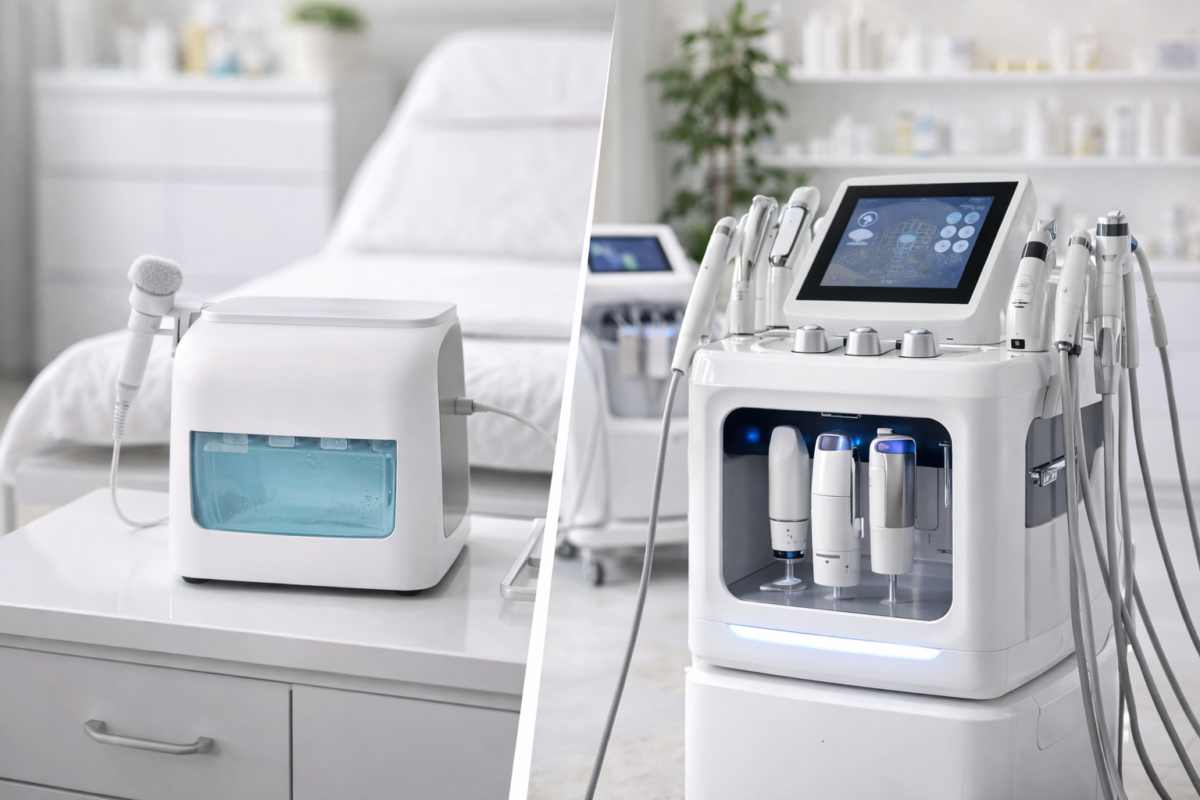
Single-function machines
A single-function machine is usually more focused on one treatment direction, such as LED therapy, radiofrequenza, hydro cleansing, or oxygen infusion.
Advantages:
- clearer treatment identity
- easier staff training
- more focused service positioning
- often easier to market
- lower risk of feature overload
Meglio per:
- clinics building one hero treatment
- smaller clinics with clear treatment focus
- owners who want simple service delivery
Multi-function machines
A multi-function beauty machine combines several functions into one unit, such as cleansing, esfoliazione, infusion, sollevamento, cooling, and LED support.
Advantages:
- broader treatment flexibility
- more package design options
- useful for customized facial services
- can reduce the need for multiple devices early on
Meglio per:
- clinics offering layered facial programs
- businesses testing several treatment directions
- owners who want more menu versatility
I usually think of it this way: if your clinic has a very clear signature treatment direction, single-function can be powerful. If your clinic needs flexibility and package-building room, multi-function may be the smarter first step.
Evaluate Safety, Quality, and Operator Practicality
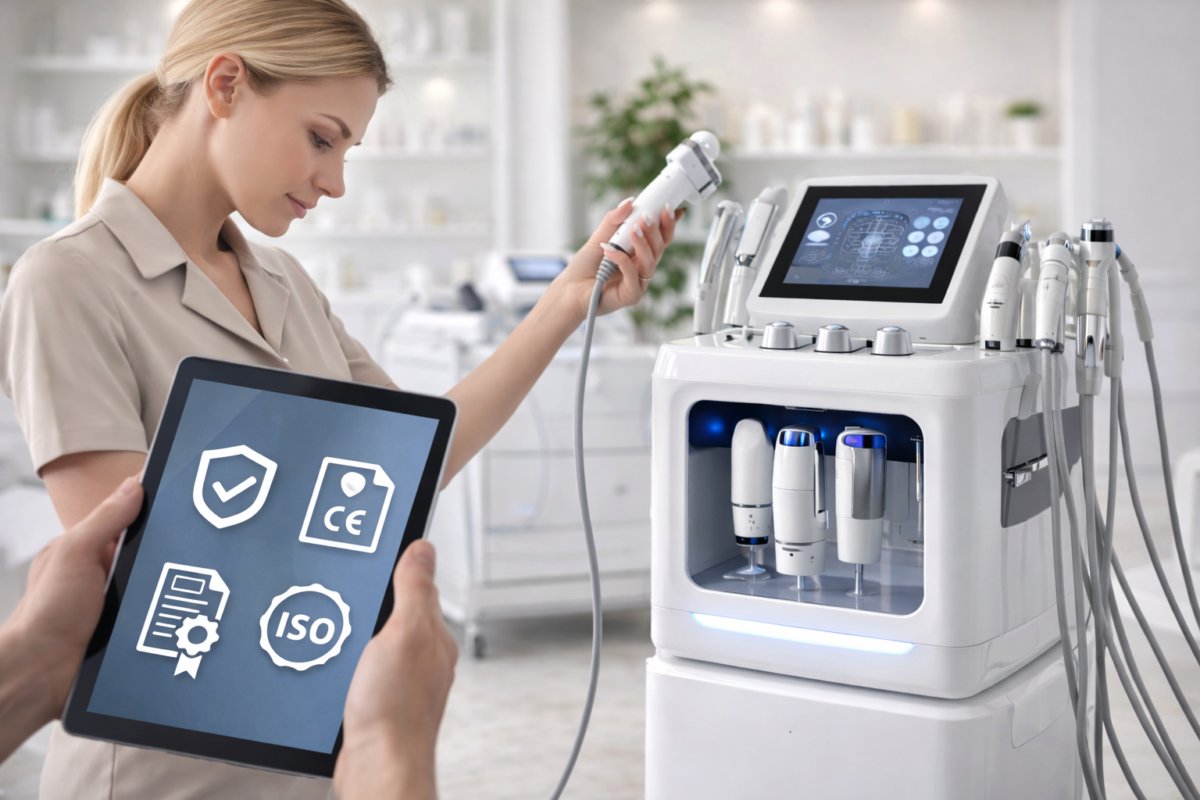
A beauty machine is not just a sales tool. It is something your staff will handle repeatedly, and your clients will directly experience. That means safety, usability, and reliability matter more than flashy design.
What I would check carefully
Build quality
The machine should feel durable, stable, and professionally assembled. Weak handpieces, poor finishing, or unstable screens can create problems quickly in a real clinic setting.
Treatment comfort
Even if a machine has strong technical claims, it still needs to deliver a comfortable client experience. Comfort affects rebooking and word-of-mouth more than many clinic owners expect.
Ease of use
A machine that is too complicated can create inconsistency between operators. The interface, settings, handpiece switching, and treatment flow should all feel practical.
Safety systems
Look for clear operating protocols, treatment parameter guidance, and proper support documents. Any aesthetic device used regularly in a clinic should come with structured operating guidance.
Supporto post-vendita
This matters more than many buyers realize. If a machine needs troubleshooting, consumables, replacement parts, or technical support, you need responsive supplier assistance.
A machine can look attractive in a demo and still become frustrating in daily operation. That is why operator practicality is a serious buying factor.
Consider Training and Staff Adoption
Even a good machine can underperform if the team does not feel confident using it.
Before buying, I would ask:
- How much staff training is needed?
- How quickly can a therapist become confident with it?
- Does the machine support standardized treatment flow?
- Will every team member use it consistently?
- Is supplier training included?
If your team is small, or if staff turnover is a concern, it is often better to choose a machine that is easier to learn and easier to repeat well.
The more treatment consistency you can create, the stronger your clinic reputation becomes.
Think About Maintenance, Consumables, and Downtime
Many clinic owners focus on the purchase price and forget the operating reality after installation.
That is a mistake.
A machine should be evaluated not only by what it costs to buy, but also by what it costs to run.
Look at the full cost picture
- consumables needed per treatment
- replacement part availability
- routine cleaning requirements
- maintenance frequency
- service response speed
- possible downtime risk
- warranty support
A machine that looks affordable upfront can become expensive if consumables are high, maintenance is frequent, or technical support is slow. A slightly more expensive machine may perform better as a business asset if it is more stable and easier to maintain.
Calculate Return on Investment, Not Just Purchase Price
I think one of the best ways to choose the right beauty machine is to stop asking, “What does it cost?” and start asking, “How will this machine earn its place in my clinic?”
A simple ROI mindset
Consider:
- average service price per session
- expected number of treatments per month
- package sales potential
- upsell opportunities
- treatment repeat rate
- expected payback period
For example, a machine that helps you create premium treatment packages, increase repeat visits, and support add-on serum sales may offer better long-term value than a cheaper machine with limited service differentiation.
The right machine should make sense financially within your clinic model.
Choose a Machine That Fits Your Treatment Menu
A beauty machine should not sit awkwardly outside your existing services. It should fit naturally into your menu.
Strong machine-menu fit usually means:
- it supports your current best-selling treatments
- it helps you improve treatment outcomes
- it allows easy service upgrades
- it creates room for treatment packages
- it does not confuse your service structure
For example, if your clinic already performs facials centered around cleansing, esfoliazione, idratazione, and finishing masks, a machine that enhances those steps can integrate smoothly. If you add a device that requires a completely new treatment logic, different client expectations, and very different staff skills, you may face a slower rollout.
The best investment is often the one that improves what your clinic already does well.
Beauty Machine Features That Actually Matter
Not every machine feature deserves equal weight. In my view, clinic owners should focus more on practical value than feature quantity.
Features worth paying attention to
- treatment relevance to your core services
- stable performance
- easy parameter control
- comfortable handpiece design
- treatment consistency
- training support
- good supplier communication
- maintenance simplicity
Features that are often overvalued
- too many rarely used functions
- overly complex control systems
- visual appearance without practical benefit
- vague technical promises without treatment logic
A machine is only useful if your clinic can use it confidently, repeatedly, and profitably.
Questions to Ask Before Buying a Beauty Machine
If I were evaluating beauty machine suppliers, these are the questions I would ask before making a decision:
Supplier and machine questions
- What treatment results is this machine best suited for?
- Which client profiles is it most commonly used for?
- Is it better for entry-level facials or premium treatments?
- What kind of training is included?
- What consumables are required?
- What routine maintenance does it need?
- What support is available after purchase?
- How long do common replacement parts usually last?
- Can this machine support package-based services?
- Which functions are used most often in real clinic settings?
These questions help move the conversation away from vague selling points and toward practical clinic use.
How to Choose the Best Beauty Machine for a Small Clinic
For a small clinic, I would usually prioritize:
- ease of use
- fast treatment integration
- service versatility
- moderate maintenance needs
- strong repeat-treatment potential
Smaller clinics often benefit from machines that can support multiple facial workflows without becoming too technically demanding. Practicality matters more than complexity.
If the clinic is still building its reputation, it is usually smarter to choose a machine that helps deliver consistent, bookable treatments than one that sounds advanced but is hard to operationalize.
How to Choose the Best Beauty Machine for a Premium Clinic
A premium clinic may evaluate machines differently.
The focus may be more on:
- treatment differentiation
- visible client-perceived value
- stronger anti-aging positioning
- premium service storytelling
- higher treatment pricing potential
- package and membership integration
In that environment, the right machine is often the one that strengthens the clinic’s premium identity and supports measurable treatment experience quality.
Final Thoughts
If I had to give one piece of advice, it would be this: do not choose a beauty machine as if you are buying equipment. Choose it as if you are shaping a business model.
The right beauty machine for your clinic should fit your treatment goals, your target clients, your operator capability, your service menu, and your financial logic. It should help your clinic perform better, not just look more advanced.
In real clinic operations, the best machines are usually not the ones with the most features. They are the ones that your team uses confidently, your clients understand clearly, and your business can monetize consistently.
That is what makes a machine the right one.